Monday, March 07, 2011

The Long Apology

"No one undergoes a stronger struggle than the man who tries to subdue himself." -- Thomas à Kempis, Imitation of Christ 3, iii

Shame is the theme for some authors, and yet it is a feeling that is at once elementary and advanced. There is the basic form, which is actually regret mixed with fear, and then there is an advanced form, which takes that as its based and tunes its song with added notes of memory, inevitability/doom, and awareness. The last one is so refined and piquant a feeling that it can, in its wake, leave us with a shattering sense that all awareness is shame, that any further awareness would result in further shame. I suspect that James Joyce, at least in his Dubliners phase, had this conviction, and a good many of us who read him have to agree.
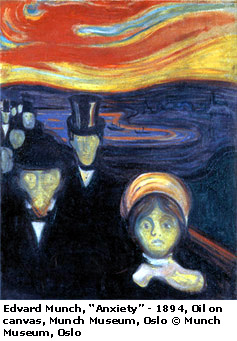
I recall the first... no, I won't speak of that, as it was not what any of you would expect and is not actually embarrassing at all... sense of reflexive shame, the shame that requires apology to no one, came when I was in the library. I cannot recall now whether it was elementary or high school, but to me there is not much difference in the two, as only the earliest years of the combined experience were tolerable. The girls were outside the glass of the cube where the tables were, and I was inside the study terrarium with a couple of friends. I say "the girls," because they were interchangeable in my mind at that time. They were the Bub Club. Since I had no sisters and was fed a daily diet of pejoration by my older brother, I was even more unequipped to handle what came next with poise.


They giggled. They giggled at me. It had to mean something. I canvassed all my female friends, demanding that they explain the coded signals of the giggle. Boys would be purposeful in such a thing. It would mean sex or violence, which were the only two possibilities in boy world. Was I being laughed at, or was one of them being laughed at for liking me? Either way, I was there as a body, and I didn't like it.

“Can you imagine the pain, the dull imprisoned suffering, hewn into the matter of that dummy which does not know why it must be what it is, why it must remain in that forcibly imposed form which is no more than a parody? Do you understand the power of form, of expression, of pretense, the arbitrary tyranny imposed on a helpless block, and ruling it like its own, tyrannical, despotic soul? You give a head of canvas and oakum an expression of anger and leave it with it, with the convulsion, the tension enclosed once and for all, with a blind fury for which there is no outlet. The crowd laughs at the misery of imprisoned matter, of tortured matter which does not know what it is and why it is, nor where the gesture may lead that has been imposed on it for ever.” – Bruno Schulz, The Street of Crocodiles, “Treatise on Tailor's Dummies.”


I had thought little of myself as a being. My brother, for instance, had considered his looks, his demeanor, his musculature, and his goals. I had considered my personality, my misery, my soul, my anger at religion, my impatience with my teachers, my desire to create an alternate science fiction universe where I was in control. Neither my brother nor I had considered our selves. Few people do, after all. It's too time consuming, when we're young, and it's too boring, when we're old.


The full self is not merely body, nor mind, nor soul, nor some layer cake, nor even the batter in the blender of all three, but all three with a knowledge of their heterogeneity and friction. Coming to that is a long, long trek. At the time of the giggles, I had managed soulfulness, and mind was on its way, but at the cost of, as Dave Thomas says, thinking of my body "as a way of getting my head from place to place" (said on a "Tonight Show" appearance many years ago). When the girls giggled, they made me think about the fact that I had flesh, that I was occupying space, that my desires had to be fulfilled through body, that the body, which had always seemed, had always, in fact, been the thing I had no power over, would have to be reckoned with. I was ashamed. I wanted to apologize.


Don't imagine that there was something particular that I needed to apologize for. I was in no way outstanding. I was purely average, in fact. Aside from, at that point, a big chip and an aggressive brain, there was nothing to notice, save for naivete.

Since that very early experience, which I have discovered many young men shared with me, the body has been my particular weak spot. It is not, of course, the only avenue. For me, it remains the dog whistle, because it is what I will soonest forget. Tell me about how my food causes uncountable death, pollution, and unthinkable misery, and I will feel that same sudden awareness, that awareness undesired, that fear mixed with guilt and a need to apologize for no particular act, but for simply being. Tell me how the iPod or apple I purchase involved a million miles of diesel fumes, how Gilbert eating a grape meant transgenic Monsanto killer tomatoes, and I will flush red. Nor, of course, is my sex a help in this. Young girls get the body shame far earlier and never have it let up. (The reason that the body was something always beyond my control was that, although I look like a very healthy animal now, I was a very, very, very sickly runt of the litter when young. I was born with birth defects in my heart that seemed to have a Eugene O'Neill sort of determinism for me. Biorhythms and biofeedback was of limited success, and pyramid power didn't work out.) In fact, the reason that the anecdote I began with is notable is merely that it is novel for boys. For girls, it would be one flea bite amid an amputation.


I have seen, since I have fallen into the modern life of apologizing for being where I am and who I am, that others sometimes do so when the pathway is the mind, but more rarely, and they virtually never do when it is the soul.

And when the hourglass has run out, the hourglass of temporality, when the noise of secular life has grown silent and its restless or ineffectual activism has come to an end – when everything around you is still, as it is in eternity – then eternity asks you, and every individual in these millions and millions, about only one thing: whether you have lived in despair or not.” – Soren Kierkegaard, The Sickness Unto Death

I can leave you to your own scenarios and let my clever reader get ahead of me, if she wishes. However, essentially it comes down to the fact that some people find themselves being forced to become aware of their mental pathways, their mental development and process, when they had managed to avoid thinking about it. When they do, they feel shame. I am not speaking of the, "Shucks, I don't know nothing about no quadrilateral equations" dodge. I mean someone silent at the side of the table, unnoticed by everyone else, suddenly feeling very small, very sad, afraid, and aware. In the United States, it's not so easy to find these situations -- partly because of anti-intellectualism, of course -- mainly because the mind is inside, and the body is outside. It's not easy to see or prove someone's mental process, and therefore it's not likely that the other person will be compelled to be aware, if he doesn't want to be aware. For the soul, the scenarios are non-existent.


What I can say is that I'm sorry. I can further say that I am sorrier still for the fact that, at this point in my life, when the hero of Steppenwolf was about to get out his straight razor, I go back to the most fallacious folly of them all. I envy.


While we who have flashes of involuntary awareness experience complex shame and thereafter feel the need to apologize for ourselves, justify ourselves, make up for ourselves, other people seem impervious. They are in the same situations, but they do not have the shame. We, some time around the age of twenty, decide that they are enviable. "I should have been a mobile home dweller like X," we say, "because then I'd have no idea that I wasn't happy." That's bull, of course, and we'd be terribly miserable, or dead. We are tailor's dummies in our own shape, and were we pressed into another we would spring back into this (Bruno Schulz's father was wrong). The people who feel no shame manage their trick not by being stupid, but by being without a self.


If you do not develop your soul, you cannot feel another's pain. If you do not develop your soul, you cannot engage God as a living being. If you do not develop your soul as part of your self, you can only hate your parts.


So, follow me down this road for a moment, just out of morbid curiosity. I have no answer, but I have a hypothesis. Suppose that a person is active all the time. A situation occurs like mine in the library. The boy in the box in this case hears the giggle and puffs up. He knows he is the center of attention, assumes it's because the girls all love him and struts over. He does not become aware of self, because he is not thinking out. The same person in a meeting who is unable to keep up with the thinking going around him just waits for the answers. There is no awareness involved, because he wants answers, and these people should come up with them. Now a woman finds that her food involves peasants suffering. She thinks that someone should do something about that, probably. It's not her problem. Those people should move, she might think.


The point is not that these are stupid people. They aren't even selfish people, per se. Instead, they are not selves. They are not integrating the components of self to be in touch with the moral, the social, the physical, and the mental. They act. We, on the other hand, inhabit and must therefore be conscious and aware. We are better off, but we live out one very, very long apology.


Monday, February 21, 2011

Power and Glory

Glory, glory, hallelujah,
right? Thine is the power and the glory? A novel by Graham Greene? Probably something punned on by a thriller writer as well, but do you know what the word "glory" means?

"The power of fortune is confessed only by the miserable; for the happy impute all their success to prudence or merit." -- Jonathan Swift
Where I went to college, the student body was slightly minority Jewish, which made Jewish the largest single religion. (I.e. 48% of the students there were Jewish, but, since all the other religions called themselves Methodists or Baptists or Christian-unspecified or Muslim, that made reformed Judaism the largest block.) The evangelical Christians noticed that our school had a church affiliation and even a school of theology and a seminary, and so they would routinely do what they could to antagonize the Jews and, in the process, the rest of the student body. I, at the time, was far more fundamentalist than I am now, and they forced me into the position of having to criticize my brothers and sisters forcefully when they would invite flames 'o hell apocalyptic speakers to proselytize outside of the student union ... on Yom Kippur. These people were just being jerks, though. They were not looking for converts. They were throwing bricks and hoping to radicalize Christians for a religious war they wanted to provoke.

Where I went to college again and again, though, the schools were public, and so they had "free speech" areas. These were a heritage of the glory days of the 1960's. These areas were most frequently used by "pit preachers." Two, in particular, seemed to appear at both schools. One was named Jed, and one was named Zed. (It seems that Zed is less well known. The web has remembrances of him, but Jed got more attention.) Both of them did much the same thing: preached at the undergraduates about how damned they were, how sinful they were, how they were creatures of lust and constant fornication, and how they were all, "GOIN' STRAIGHT TO HAIL!" If, on the other hand, the students would only accept Jesus, then they wouldn't go to Hail. They'd "Go to Glow-ry."


Zed was particularly entertaining for the students. I never saw either preacher convert anyone, unless you count converting the antagonistic into the radical. They provided an excellent rallying point for gay and lesbian groups, and they were figures of fun for the lunch crowd. At Georgia, the students sat on bleachers and chanted along with the preacher, "GOIN' STRAIGHT TO HAIL!" They'd then applaud, as if they'd just done the wave.

Of course one does not "go" to glory, as glory is not the antonym of Hell. Glory is also not a synonym of power, nor an empty syllable to go with vestigial Hebrew phrases like "Hallelujah." It is, instead, "Fame for goodness or greatness."

Middle eastern rulers understand glory, while northern Europeans understand fame. Fame is glory without historical memory, I think.

People go wherever a dead teenager's coffin goes and stand in line for hours to take a look at all his stuff. They travel thousands of miles to look at all the official statues made as publicity for the tyrants of Egypt. For thousands and thousands of years, rulers in the middle east have known that the very first thing you do upon taking charge is force a bunch of artists to start making your likeness and plastering, taping, painting, hammering, stapling, singing, and gluing it up everywhere. Make sure that visitors and the natives alike cannot escape seeing an enlargement of you and that they realize that you're big, really big.

If you're leader of all Turkmen, you need to show it, in gold, in every direction. Trust your gut: one day tourists will stand in line to bask in its beams.
In the United States, though, we think things like that are ugly, vainglorious, and obviously futile -- unlike winning at "American Idol." That gets an important recording contract and fame. Fame means everyone WANTING you. The other thing means everyone seeing and fearing or obeying you. That's why we consider it the height of progress when we can bring a "Miss Kabul" pageant to Afghanistan and tear down a statue of Saddam in Baghdad. Down with the official power, and up with the fame.

Not that I disagree about the propaganda thing. I'm a Christian. This is why I know that it's revolutionary, absolutely, when Martin Luther said, "yours is the power and the glory." In other words, we follow Jesus in denouncing any temporal glory, but I don't think I can praise the substitution of fame in its stead, nor the quiet way we have given up on the substance of glory.

You see, those dread monarchs were putting up their likenesses because they were going to get authority and fear and quaking knees. Their glory and power were in one body and being. In the United States today, we have moved into a world where power has slipped away, where morality has ceased to exist, because power and morality both have gone into this deferred mass. Individuals go to their Baptist churches and drop checks for $10,000 a month in the plate and go to work, where, for the good of the company, they agree that corporate strategy involves a plan to increase fees for consumers with low balances and overdrafts and a new order of payments processing that might increase overdrafts on people with low balances. That's not evil, though, because it was a good decision for the company.

The company isn't evil, either, because the company's decision, which is going to have a huge effect on tens of thousands of people, robbing many of them and sending hundreds of thousands of dollars from their accounts for no wrong of theirs, is simply a manipulation of that which is allowed, and companies are supposed to maximize profits. This is their command, and they would be failing if they didn't. Furthermore, a competing company would surely do so, and then that company would have that increased capital and use it against this one, and its directors might not be good people.

Our corporate landscape has gone entirely M.B.A. It is working as aggressively as it can according to its solitary rule: maximum profit for the lowest wages possible, with the lowest quality necessary. There is no thinking beyond the next quarter, unless it's about product development. And thus it is that every human on the planet has ingested dioxin, most have been exposed to PCB's, rBGH milk is suspect (IGF-I is identical in cows and humans, and the rBGH causes increased IGF-I expression), and "Round Up Ready" plants are extremely suspicious, and yet now in our food chain. Our own body's genes are patented by Novartis, Monsanto, and Aventis. We live our lives penetrated by radio waves from all spectra. We drink estrogens. We accept that there is such a thing as "the consumer" and that this creature is distinct from "us." We believe that there is something called "labor" and that it is also distinct from us. We believe that "middle class" means just about anything.

These changes are mainly in the last 50 years as well.

What we have now is not what we had. There are no mustache twirling villains and no gleaming smiled heroes. There is no glory. The evil that the average person faces is nameless and faceless. A company is convincing his eight year old daughter to text more, and it is doing so in order to make her a cash machine. It doesn't want her love. It doesn't want her to know its name. It just wants power over her. The bank he deals with doesn't care if he hates it. The Wall Street trader who drove up wheat prices and led to massive instability in Africa doesn't care if people wish him dead. He is without a name and is content. He just wants the power, the money.

They have no glory. They're making us all a Hell.


Sunday, February 13, 2011

Consider, thou, the river

This morning, I was trying to come up with controversial factual statements -- statements whose exact truth could be and is debated by persons of good will -- and I stumbled across the fact that some physicists have discovered a hypothesis of "entanglement in time" at a quantum level. By the way, hypothetical and quantum are the best sorts of entanglements in time. Although the author suggests that this leads to time travel, it would be of subatomic particles, and so it would mean that muons are coming from the past or going back, and we goliaths of molecules are not harmed or benefited in any way.

I've said before how synchronicity has always, even before I read Jung at fifteen, worked for me. I needed no convincing of convergence, because I think the microcosm/macrocosm thing is just fine.

Also this morning, before I sought topics, my best friend treed a cat. She's thirteen years old, nearly fourteen, losing her teeth, arthritic, and still very dainty. All of her life, she has been the aloof and imperious one with her surroundings, fond with me. Her usual habit with cats is to cock an eyebrow at them and to treat them, like most things, as beneath her contempt. Now, though, that she has past her middle ages, I am glad that she got the primal joy of chasing a cat up a tree. She did seem embarrassingly pleased with herself.

As she did that, I thought over the length of my life and whether I had done or been or gotten anything that had been promised or sought. For a day or morning, at least, I could look not at the span. I could say that there is no such thing as this river. There have been segments, only. There have been rapids and swells, deep portions, stagnant pollution, and great agitation, and there will be a petering out in a torpid or tormented run at some point to come, but these things are neither here nor there. Each section is a section, accountable to its own judgment and frustrating any whole.

Did I go somewhere? There is no where to go. Did I achieve something? There are no things to achieve. Is death supposed to be a yardstick? Why? Surely it's no evil thing, if it occurs to every thing that has ever been.

This, you see, is quite pleasant, in the end. Each bend of the river is a river all its own. It begins when the last horizon is obscured and ends when the next comes into view. The very idea that we must look at birth to death and assume that these are appointed and meaningful measures, that there is an opening bell and a finishing tape, is absurd. I'm alright just now. I don't think I will be pretty soon, but right now it's a nice morning, nice afternoon, and with a fresh shave, a good friend (who bravely frightened a cat), and gasoline, it's enough. It's far more than enough.

Wednesday, February 02, 2011

Unpardonable Interruption

"Averagely wise a man ought to be,

a man should be
never too wise;
for a wise man's heart is seldom cheerful,
if he who owns it is too wise." Poetic Edda, "Sayings of the High One" #55


I have an idea for writing about interrupting, because I interrupt, and because interruption seems to be a skill by itself, but this is not it. This is, instead, about music, which is why the quote has nothing to do with music.


I have alluded to my punk rock past in the past, and even I am tired of the glory days.


I do still harbor a grudge against Lee Abrahms (now at XM/Sirius), who kept my brothers and sisters off the radio back in '81, who made "punk" a scare word, who played into the "Nightly News" stories on "punk rockers from England with safety pins in their cheeks whose battle cry is 'Anarchy.'" It's shocking that Lee Abrahms managed to harbor shocking thoughts, after so carefully screening America from shock, but apparently he had a "send all" e-mail with some Thought Crime in it. His inside came outside, and that's not allowed in business.


Anyway, before people were scared of rap and rappers, they were scared of punks. The difference is that they never got a chance to get over their fear of punks, never put us in the top 40 (unless you count The Police and Talking Heads, and even now - even as The Pogues sing about drinking to the point of damnation and have it used as a soundtrack for a Kia sport utility vehicle - the same folks who denied us space then are erasing us from "oldies" and making us unexist). We remained the unclean bacon product of music.


Why? Why the hatred from music itself?

Well, our central point of pride was anti-corporate sentiment, so I'm sure that didn't help. On the other hand, we were touring machines, and the corporations don't care what you think of them, if you go on tour for them. We were liberals (unless we were Nazis), so that might have been out of tune in the cocaine Reaganaut industry, but the hippies were worse. We were relatively intellectual. None of this makes sense, though. In general, the punks were no more unmanageable than what came later. (Rappers have been singularly obliging for the corporations. Their "more money, more bling" ethos has been tailor made for corporate bottom lines. The fact that the group is usually one highly addictive personality is also good for managing and replacing.)

No.

I actually think that other musicians and the musical component of the music business (the folks who manned the operating boards) disliked Punk in a way that they wouldn't rap and didn't disco.


Disco, lest we forget, sucks. It is horrible. I don't care what you say: it's awful. It has one beat, no lyrical content, and is, at best, an adjunct to coke and sex, not an art. Take the best disco song, strip the rhythm track, the synthesized strings, and play it with a Dixieland band, and it's fine. However, it had synthesized strings. It had synthesized beats, as soon as they could be synthesized. It had loops. It had, in short, studio magic. The old guys with the ratty beards and stringy pony tails didn't want to ever listen to a disco record (although they seemed to enjoy the coke and sex), but they loved disco because of all the fun they could have in the studio making those interesting burps and gurgles.

The corporate guys.... Well, let's not consider those reptiles. They've demonstrated that they do not think at all, most of the time, and, when they try, it's a mistake.

Rap, too, is a great deal for producers. Rap, in fact, is a producer's medium. The producer often gets artist credit on a rap song, because the studio writes and makes the "song." Studio rats think rap is neato, because they get to push tons of buttons and run all kinds of software and experiment endlessly with loops and stuff. They pride themselves on inventing "beats," which have little or nothing to do with playing drums.


The studio guys, and the corporate guys alike hated punk because we interrupted.


We didn't merely interrupt their smooth progression from Fleetwood Mac to Mack Daddy, but we interrupted musically, too. You see, to make a song, the process is supposed to be:

  1. Audition as a singer
  2. Get a producer from the company
  3. Buy a song that the producer thinks is right for you
  4. Sing the song over some tracks
  5. Thank the company and wear its placard.
Or, if you are a "band" (and they would rather you not be), the process is:
  1. Learn the instrument to virtuosity
  2. With said group of musicians, produce a demo of professional quality
  3. Submit finished record (demo) to Artist and Repertory dude with packet of cocaine "accidentally fell in there"
  4. Get signed and assigned a producer
  5. Have demo re-recorded by producer who rewrites the songs for their "potential," puts new drums on, makes the rhythm sound like whatever sold most last year
  6. Have singer praised and given "side projects" until she or he does steps 1-5 above
What you are not supposed to do is be a collaborative unit or a team, a la The Beatles. You are also not supposed to go perform and build up a fan base of people who like the music as it is instead of how the producer thinks it should be or how Lee Abrahms's closet of teenagers says it should be.

Punk annoyed everyone. The corporate guys saw it as a monkey wrench to a system that was working just fine. The punk route meant less cocaine, for one thing, and it meant that there would be no way to be sure of the next financial quarter's profits.

It annoyed the studio guys, too. It interrupted. Instead of studying the instrument for decades and then submitting the perfected performance to modification, people were shortcutting. They were having their witty lyrics or protests and going straight out with them, and yet
without relying on a studio to do it.

That's awful, isn't it?

Instead of sturm und drang compositions about what it would be like to be a ghost in a wishing well, we were strum and dang. We grabbed Ventures records and rockabilly and just ... played ... badly, but we needed no one's help in doing it. If we bored the audience, we heard about it. We didn't have to wait for a report from a focus group.

Wednesday, January 26, 2011

Rassen Fratsen Hummelsummer

We seem to be in a time of guns again. Since February 2009, just after the inauguration of President Obama, people have been clutching, fondling, and fantasizing about their guns. Before March could march in, people were marching as well as they could in their re-enactor costumes and Rascal scooters to protest the "tax increases" of Obama -- who had not even submitted a budget, much less raised a tax -- and to swear to "take our country back." Gun sales soared.

Over the summer of 2009 and 2010, we were treated to "town hall" protests with people asserting "second amendment rights" to go to see elected officials with loaded pistols and assault weapons. Apparently, part of having a militia is now intimidating the choice of the popular majority. Part of answering the call of the government to defense of the nation is to menace the duly elected officials of the government.


(What it meant to be armed for the levee.)

Anyway, the shooting of Gabrielle Giffords must not be tied to any of this, we're told. I agree, even, that the shooter is unconnected, more or less. He's a paranoid, and paranoids are not programmed by anyone.

The people with this talk are unhealthy. They are all sick. They are, in fact, petting the gun but not shooting the bullets. They are displaying, threatening, muttering, growling, and hating as hard as they can, but they're not releasing anything, doing anything, or achieving anything.

William Blake's "A Poison Tree" is a bit of a high school cliche, I'm afraid. It talks about the power of anger to breed, to amplify, and finally to overwhelm. It begins by saying that expressing one's anger ends the anger and contrasts that with a hidden anger that ends in murder. Perhaps it's a good poem for the politics of the day. However, I was thinking that there is a change that I would make to the poem. Instead of the foe being dead in the garden, I think the poet/speaker would be dead.

Unspoken anger is an interesting beast. If your horrible girlfriend dumps you -- for no damn reason -- and is off at dinner with some guy -- a complete jerk, of course -- and faithless, with no concern for all that you've done, then you will, naturally, be stung by the injustice of her wicked character. You will spend that night writhing in hate. You won't sleep. Every time you calm yourself down, your brain will remember the day, and even a thought like, "I'm glad I'm not still upset" will lead to remembering it again. Your blood pressure will go up, cortisol levels will soar, muscles will ache, concentration will wane, digestion be ruined, and sleep flee. Meanwhile, that unspeakable cow at dinner will not notice a thing, will not feel the ugly thoughts, will not be pierced by the sharp comments. She will enjoy the dinner and the company, and she might even spend the night with the company, and, if she does, her experience of the night will be unaffected by your experiences.

The misery you have will make more misery for you, but it simply does nothing at all to the one you hate.

And so, if you think that coming up with an Obama joke or reverting to 1960's racist talk will "show them," it won't. I know that it won't. I spent eight years, and it seems like a lot longer, in protest at an administration that violated US law, international law, and divine law. In comparison to that, people showing off guns because they don't like the income tax are pikers.

Oh, go ahead, folks. Say it.

Don't shout about "Taxed Enough Already." Say, "I refuse to accept democracy! It's not fair that my side lost!"

Don't say, "We want America back." Say, "Black people can't be president."

The longer you bottle it up, the worse it will get. I know it hurts that you lost. I know that you're in pain, even though you don't actually have anything to disagree with about the president's policies (just the who, not the what (unless by "what" we mean "race")). Don't forget, swearing helps relieve pain.

Next time, you can vote Yosemite Sam or Phyllis Schlaffey.

Sunday, January 16, 2011

Immigrants!

I was on my way to my church today (it's the mother church for America, of course), and I drove past a number of businesses whose names I only noticed for the first time. One of these was tucked away into a dying -- which is to say non-Wal*Mart -- shopping center and had been in business for several years. I had seen it and its storefront and its sign and its customers on many occasions, but I had never noticed it.

(Who knew? It's a chain! This one is in Virginia.)

That's right: Star Nails. I see now that "Star Nails" is a thing that one can get a franchise for, that it is a company that sells kits and licenses, rather than an actual company that staffs. I do not know if being Vietnamese and female is required for getting the franchise, but, given the uniformity of operators, it seems like it could be. (The mini-icon for the franchise company looks like a lotus flower.)

I have nothing particularly against immigrants, myself. About half of you, I understand, are "very concerned" by those immigrants and want them to "go back where they came from." It's easy to feel that way -- harder to think that way. According to a recent study, most of the folks taking the hard "conservative" stance these days are, in fact, not thinking, but feeling, to start with, and they have enlarged amygdalas. (Some time I mean to write about that study, because I'd say that it's not conservativism that appeals to the reptilian brain.) It's lovely to think in big, gelatinous lumps, to feel secure that the problems are "those people" and that they "need to" do something simple like "go back." It feels wonderful to have an answer.

Unfortunately for me, my family arrived on these shores in the 1630's, so I have had to give up on anti-immigrant feeling. Ever since those nasty Scots started showing up in the teens (1810's, I mean), things have been going down hill. The Germans, Jews, Irish, Slavs.... If we're going to complain, then can't I complain that they're all filthy immigrants coming in to take jobs that belong to the colonials like me? The only ones who have any right to complain -- aside from the Indians, of course -- are the descendants of the enslaved Africans. They've been here as long as the planter families and colonists and frigid Puritans. Curiously, when I see anti-immigration protests in Arizona or Texas, I don't see Black people or Colonial families.

It could be, of course, that the Colonials never did protest immigration, that the "Know Nothings" and the like were always a product of immigrants themselves turning on immigration. In The Declaration of Independence, Thomas Jefferson is listing all the violations of divine law and common rights that George III had made, and he lists:
He has endeavoured to prevent the population of these States; for that purpose obstructing the Laws for Naturalization of Foreigners; refusing to pass others to encourage their migrations hither, and raising the conditions of new Appropriations of Lands.
You see, we of the Colonies wanted immigration. We even went to war to allow it. Now, yabbos want to arm themselves to prevent it, and one Great Tit demands the use of Predator drones to blow up economic migrants.

Vietnamese tend to face less of the hatred than "messicans." Nevertheless, the Americans who hate immigrants hate them, too. They say the immigrants stick together, that they talk their foreign language to each other, that they use only their own family members, etc. (They say the same about Indians, of course.)

Me?

I want to know what the heck a star nail is.

Is it a nail made of flaming gas? Is it what a person uses to tack a star in place so that it doesn't slide down the wall? Obviously, if the salon were offering fingernails and toe nails that look the same as Hollywood and Broadway stars, it would be called "Stellar Nails" or "Starring Nails." If it offered nails that shone as if stars in the sky (would anyone want that? it would require them to be 6,000 degrees C), then they'd call the place "Sparkling Nails" or "Twinkling Nails" or "Fusion Powered Nails" or "H-bomb Nails," since I doubt they have the secret of sustained fusion chain reactions (and, if they did, would they not be Topamak Nails?).

We know the place is owned and operated by immigrants, but what if their sign means exactly what it says? What if they really are selling star nails? What if the ladies (and always one boy) working in the place are not from an indistinct far eastern nation believed to be Vietnam but some place... farther away?

Think about it, man.

Thursday, January 13, 2011

Advice for Apocalyptic Living

Eschatology has always been popular, so it is not possible to say that it's more popular now than any random point in the past. There is not a single thing today that is remarkable in this respect. There are movies now? There were then, too. There are books now? There have always been books. There are people holing up with weapons? Again, no news there.

I have, though, wondered at the birds and fishes dying in unexplainable numbers for mysterious causes. There is no reason I can imagine for the apocalypse starting or finishing in Arkansas, any more than I can think of anything to prove that Louisiana hasn't already been visited by the apocalypse, but the prettiest blackbirds dropping from the skies all at once? Fish all at once bobbing to the surface? Both on the same day? If it's not a sign, one wonders.

When I was young, I read up on the end of days and the end of the world. These are separate things. The end of the world is a question of nuclear weapons. The end of days is when time ceases because of the lack of calendars because God made days and their ending. Some people, in the 1970's, were preparing for the one, some for the other, some for both. As a teen, I was secretly eager for either, I think.

It is not quite thanatopsis, this urge. It is not the inborn swim to the spawning grounds to die, the voice that urges us to the wilderness. Instead, especially as the young love the End, it is a seeking out, I think, of heroism. You see, no one could think of the end as the end. The narrative of the end was always a narrative. The gravest silliness going about now is the "Rapture Rangers" of the Left Behind series. While you might think the end of the world, the judgment of the dead, and the second coming would be fully and adequately described in the Bible -- that it would be, after all, the end of things temporal -- they get sixteen "novels" out of the "end." Nuclear war offered us my favorite, Alas, Babylon (the same author's Stop Time is one of the better things a body can read) as well as the nugget-licious On the Beach and Fail Safe. Since those heady days, nuclear war has given us dozens and dozens of films, novels, and genres of fiction and film -- the nuclear zombie, the nuclear mutant, the nuclear survivor, the nuclear nomad.

Both the end times and the end of the world offer the young believer an opportunity at random heroism. This is important. I could not be a super hero. I would never be bitten by a radioactive spider or bombarded by gamma rays or come from Krypton. However, if The Bomb fell, my innate cleverness might make me a hero, and if the end times came, my virtues could make me a "rapture ranger."

For me, scriptures were too serious for any trivializing with fantasy. God is too ineffable for the horrors of a novel about gaming judgment. God's will is too mysterious and magnificent for anyone to put it into a plot. God's mercy is too divine and superior for any author to create lists for the inferno. Therefore, I never got into a pleasure at the thought of the end, but I did get interested in the signs.

Finding signs and omens is like a Bingo game for the faithful that never ends, but we get to call our own cards.

So... suppose one or the other were to happen. By the time I was sixteen, I realized that, in the event of nuclear war I would be a puff of smoke and that, if I weren't, I would wish I had been. By the time I was thirty, I began to wonder whether that genre of nuclear survival fiction was a sign of national denial and trauma or a sneaky way of getting us all to believe that such wars could be survived by the virtuous, that they might be a good way of getting rid of the undesirables and that they might therefore be a militarist's best friend.

Now, though, I think that either of them is not as described by men. End means end. End means, from the point of view of flesh and time and motion in time, end. There is no tricking of God, no mocking of life, and no restitution one might make to oneself for an end. (Does a person with a week to live who goes to get drunk with a prostitute and a wad of heroin 'make up' for a boring life? Of course not.)

So, if you think there's an apocalypse of any nature coming, I have some advice. You won't be too shocked, I hope, if it echoes what one finds in the Gospels.
1. Don't pay any attention to it.
2. Pay attention to being a good, loving person.
3. Live each day ready for the last, morally.
Climbing on the roof with a bucket or barrel is not required. Buying gold is not helpful. Getting juicy over the prospect of your neighbors dying is almost certainly not to your advantage.

Sunday, January 09, 2011

Crazy people

First, I want to point out that


THAT is some darned fine writing, and it's not fair that I should get nothing for it.


Secondly, as we have an attack by an insane person on a politician in the midst of horrid speech acts and violent implications, the subject of crazy people versus evil people comes up ... again. While the New York Times talks about how this violence shines a light on hate speech... sorry, I mean "hateful" speech... there is a very important nut to be pried lose from the conversation, and that's the attacker.

Congresswoman Giffords's opponent held fun and wholesome events for the whole family, like an M-16 shooting contest. Sarah Palin seemed to need, desperately, for true patriots to "take aim" at Giffords and had a picture of her in the crosshairs, but we now learn that... heck!... they didn't mean it! (You see, in art, we would say that the author does not get to determine the meaning of the message, that the message is produced by author, medium, and audience together, and this only in the act of reading. For Sarah Palin, though, the things mean what she wants them to mean, to the degree she wants them to mean them, and change.) And Republican senators are saying that the crosshairs thing is the fault of anyone who questions it. Lamar Alexander says that people simply shouldn't talk about Sarah Palin's bounty on Giffords.

Now, lets look at all of these weasels and agree that they are vicious, spineless, unAmerican, and undeserving of a place in a polite society. Any person who advocates, or allows advocacy, of violence to settle what cannot be settled democratically in a nation of laws is a criminal, and that includes Palin and the rest.

There is no innocent way to flirt with "second amendment remedies," in Sharron Angle's term. (She was referring to what would happen if she didn't get elected senator: someone would "remedy" the problem by means of arms.)

However, the person who pulled the trigger in this instance does not appear to be a political assassin. He does not seem to be a Leon Czolgosz or even a Sacco and Vanzetti. His Face Book and MySpace pages -- now aired for everyone to ridicule and speculate on -- show that his favorite books "were"... everything a high school kid reads, with the addition of Ayn Rand and Hitler. On political blogs, the right wing trolls are trying to say that he is a leftist because someone remembered him in high school being left wing and because he read Animal Farm and Brave New World. He rants extensively on YouTube about "grammar thought control." He looks for love, begging for attention, and shouts out how angry he is.

That combination of hostility and loneliness is the very definition of the floundering teen. It's why I was dateless for a long time, and why you were -- if you were. It's why adolescent males are toxic substances. We can't help it, of course.

It's the other element, though, that we need to look at. Ignore the fact that the young man dropped out of high school, couldn't stay in community college, and had a trivial reading list for now. Ignore, for now, the "Im cool" gestures. Look at the "thought control by grammar" and the use of past tense. Notice the YouTube conspiracy videos. Kurt Vonnegut said that 14 year old boys make the best soldiers, because they are filled with hormones and have no conscience. Seventeen year old boys are not much better, except that they're angrier. Take that anger and offer it an outlet, give it a target, and you can man your phone bank, fill your lines, and field an army. You can't, though, get a killer, usually.

Paranoid schizophrenics kill. The reason they're not out there being manipulated and used more often is that they almost always insist on a private mythology for their delusions. If Glenn Beck's personal mythology has George Soros pulling the strings of the world, a paranoid schizophrenic listening to him will reject it. Instead, his or her illness will make some other thing, some private signifier, blend in. The angry boy will go off and beat an immigrant for you, and a paranoid schizophrenic will kill, but not for you. The paranoid will take something from school, like grammar lessons, and then inflate that into something huge, and then that will combine with the next thing he hears, and, like a myna bird, he will create a phrase of objects for a master myth.

I actually know something about this, as I probably had a thing akin to it when I was young. I can't say that I was paranoid, nor even schizophrenic, but I know the delusional web. My psychological response to having endless profusions of tubes running into my arm and groin, keeping me alive, was to believe that they were, instead, draining away my soul, and then that such 'tubes' were contained in any touch between any two people, and thus that any touch with any person meant a vampiric draining.

I got over it.

The point is that no one wove that for me. I did it myself, with emotion plus random objects.

The shooter, here, seems, and seeming is all there will be, to be a paranoid schizophrenic. If there was a white male in his 50's who brought the shooter to the rally and launched him at the dais, then that is a killer. That is the difference between the insane and the evil.

Wednesday, January 05, 2011

Sympathy for the Plague Rats

Stranger passing by, consider, for a moment, the plague rat. In the hold of a ship, gnawing on grain or bounding out onto a dock – weaving through odor rich streets or spinning a nest of fabric, straw, string, and dirt for its young – the plague rat carries death along with it wherever it goes. We curse the creature, calling it by its ancient name of 'vermin' and 'pestilence.' The bird masks of the physicians in the seventeenth century that astonish people today might well have been matched by rat masks for the undertakers.

My thoughts have turned to this animal for natural reasons. On the Monday after Christmas, I was at a fine restaurant to have a fine sandwich of meat and dairy and a beverage of sugar and emolument. As I went into the Splash Mountain-style switch back of the line (queue, for our stranger strangers), a family came in behind me. Pa, for that, I feel certain, was his name, wore a Metallica tour t-shirt emblazoned with “Kill 'Em All” on it. Ma was wearing a plain jeans and shirt combo. Jr. was sporting black hair dye, wallet chain, an open jacket, and a weight problem, while his younger brother, Trip, was fitter, more appropriately rock 'n roll. Sister had very effective makeup and bangles and t-shirt and showed her figure to great advantage while obscuring her features in an unmistakeable announcement that she was not 'pretty.' She was made up in the way that they call 'emo' – which is to say the thing that happened when punk cosmetics were stolen by the heavy metal kids and then stolen by the goth kids and then stolen by the heavy metal kids again. Junior is the focus of this story, though. Junior was a plague rat.


Pa may have had the t-shirt, but Junior had the power. Although he spoke with perfect politeness and effeminacy, Junior accomplished his goal by coughing at a rate of five to seven times a minute without ever once bringing a hand or arm up to block. He did not cover his mouth or even show a twitch of a muscle as if any part of his brain had any motor impulse toward covering the cough. He did not turn his face toward the ground, or away from people. He simply coughed, straight ahead, constantly, from his doughy face toward whatever surface was unlucky enough to be within three meters of him.


I pulled up the hood to my jacket. I turned away. I went to a different cashier. I sat away from them. I did what I could, even if it meant not getting to stare at Sis's body. I fell ill.


The next morning, I had a sore throat. The next day, I was coughing, and that night I nearly died. When I went to the doctor, he assumed, I think, that it was a boo-hoo cold, but, in fact, I had pneumonia. I had a good fever, and my breathing sounded like a hookah convention. (Hey! I'm Aqualung!)


Anyway, the word I used to describe Junior in my mind was “plague rat.” All during my illness (I'm a bit better, but I'm not healthy yet) the word stuck in my mind. It kept clicking, like a rock stuck in the tread of a sneaker, everywhere I went. I don't know how it is with you, Stranger, but when that happens to me, it usually means that I'm not done with the concept.


Oh, and it often means that Jungian synchronicity is going to happen.


Sure enough, the book I've been reading at lunch, At Home, by Bill Bryson, talked about the plague after I had fixated on my term. He made the point that the plague killed the rats right along with the people, and so it isn't as if the plague rats were getting out of the deal unscathed. Indeed, we think of the plague rat as a creature maliciously spreading a disease, but, in fact, it is an animal that spreads a disease by bumbling.


The two-legged sort of plague rat – our bulbous friend at the Burger King – is a fool. He is sick, knows that he is sick, and thinks of no consequences. The world stops outside of his flesh, apparently, or outside of the present moment. Thus, he wants to go, and so he goes, but covering a cough is not an active thought. Or he could be a malicious animal of a different sort than we usually think by just being as selfish as a toddler. It might be that he feels that his suffering is the only suffering of any note, that the rest should suffer with him, or that his hunger is more important than another's safety. Any one of these three would be wicked, but stupidly wicked, bestially wicked.


I think most plague rats, though, are fools, not egomaniacs. Consider the rat itself. If we want to find a wise rat, a rat with complicity, we need to look at the ship's rat that knows that the ship is sinking and manages to jump just in time. That's the clever rat. Odds are that the ship is out at sea and it won't make any difference, but at least the rat has escaped a certain death. The plague rat, on the other hand, has no foreknowledge, cannot read the weather, cannot see the fireships sailing alongside, cannot feel the creak in the wood, doesn't know the bilge is backing up, doesn't realize that the last flea bite was worse than the one before, doesn't notice that there are extra bumps on its arm pit and neck. The plague rat just gets sick and dies.


You see, that other rat – the swimmer – is incomprehensible to me. I feel less sympathy for it.


I moved to Manhattan in August, 2001. In a month, terrorists attacked. At the end of the year, my boss left her position to take another, sealing my doom in the job. The next year, as I prepared to leave, the power went out to the entire northeast of the U.S. I moved down to Baltimore that year and began working in a public school. The pay was good, but I started in August and, by October, there were whispers of crisis. By December, it was clear that the school system had a budget of -$130,000,000. The prior year's administration had written one hundred and five million dollars of bad checks. By January, all persons hired that year were laid off, which meant me. Private grants kept me employed through the term. At the start of the next school year, the principle, vice principle, and eighty percent of the administration had left, and I was unemployed. I moved down to where I am now, and things seemed alright. Last year, they eliminated 20% of the faculty.


The plague rat is leading a doomed existence, and its illness makes it seek a nest all the more. It thus nestles close to people most urgently, and its corpse's passengers flee. The ship's rat leaves just before the disaster strikes. I have never understood the ship's rat, and I'm beginning to feel more and more sympathy for the other fellow.

Saturday, January 01, 2011

From Flaubert

"Axiome: la haine du bourgeois est le commencement de la vertu." -- Gustave Flaubert, The Dictionary of Received Opinion
When I first read Flaubert's dictum that "hatred of the bourgeoisie is the beginning of wisdom," I wasn't sure how to take it. I encountered it while there were still punks roaming the earth and when I still was one. Surely I had thought the same thing, after all, that no man could achieve anything without first starting from hating the bourgeois. In fact, I spent the years from age fourteen to nineteen in a seething rage against all things middle class, especially the mall, the high school, the pretty, the glad handing, the cologned, the puffed dudes and fringed girls, the top forty radio, the best seller lists, and Gene Shallot.

I also knew, though, because, like a good many punks, I had gone into academics, that Flaubert might mean something more literal, given his era. He might mean a class with borders, and might in fact be snobbish as much as scornful. One never knows. Then there is the worry of irony, as Flaubert's irony is not always obvious. Hesse, after all, would bawl and blast the bourgeoisie as the worst of all things. Dostoyevski would. Lawrence would. In fact, pretty much all the good authors did. Therefore, it might be irony... but that trend wasn't by a trend by Flaubert's day....

Never mind. I put my disgust at the middle sorts into the background as I tried to calm my narcissism. There is a period of two decades or thereabouts when both sexes find themselves fascinating, both for beauty and revulsion. Either way -- as objects of admiration or poking with a stick -- they think that their own selves are very worthy of exploration; and then they think that their biographies are necessary for understanding themselves; and then they place their biographies, if they make it this far, in a perspective that stretches to their individual horizons. For me, that meant that I had my long stretch of thinking my awfulness needed a witness. Then I needed to think about how it happened to be that way, which meant biography. Then a decade followed where the importance of my biography gradually took its proper place in the context of history and ceased to be the star of the show. During this process, I explained away that five year misery of hating the middle classes as just normal rebellion and achievement of individual identity. Ho-hum. It was ever thus. Sic transit gloria mundi.


Recently, though, I've begun to wonder if that's true.

  1. First, the authors I named above share a quality, aside from their scorn: they, like perhaps 80% of the punks, are the children of middle class parents.
  2. Second, I realized that the things that I set out in endless manifestos in 1978 of "Things I Hate about Them" are things I still hate. In other words, it wasn't a phase. I may not have much paisley print, but I still have the pit of the stomach gagging when "Top Video of the Day" comes on.
  3. Third, I began to see that there was something about the middle classes themselves that separates them from the upper and lower classes, aside from money.
Ask yourself this: are the children of the working class raised filled with hatred of the values of the working class? Are the children of the upper class raised with hatred of the values and culture of the upper class? Lower class children grow up hating their material conditions and with aspirations, but do they grow up wanting nothing so much as the chance to write a stinging satire or direct a cruel portrait of their hideous families? Do the children of the wealthy emerge to write poetry ridiculing their habits of education, manners, and socializing?

Working class children may adopt a middle class speech, but the language itself will be retained, while middle class children are eager to climb or descend, whichever way they may, in language. Upper class children may affect lower dialects to "pass" in society without embarrassment, but they are not abandoning their speech, grammar, and syntax.

The children of the middle class, though, seem to have perhaps fifty percent satisfaction at any moment. The rest of the time, there is a strong kick against the pricks. The reason children of the middle class tend to remain in the middle class -- or they did before the current generation -- but they change their approach and focus, and, most importantly, they change what the middle class is.

You see, the upper and working classes tend to be defined by one another, by relations of power and capital. The former tends to spin "culture" off from itself as an armor or a set of shibboleths. The latter creates contrary, counter and resistant culture, or such culture develops synthetically from the accretion of economic migration and mixed assimilation of populations. Only the middle class has a self-aware culture.

The middle class tends to come from the middle class and from the working class. Rarely do the uppers fall, but the lowers have risen from time to time in the US, UK, Germany, and Netherlands. Thus, in these cases, the middle class is a sort of consensus of averaging. No view gets to be reflected, as all views are taken down to their most palatable features. The middle class is known not by its money -- especially not in the U.S., where Americans stupidly call themselves "middle class" whether they make $20,000 a year or $200,000 a year -- but in culture. It has no title as its entry point. Its entryway is a set of views, a set of speech habits, a set of values. In other words, it is a voluntary matter more than the other classes.

You want to be middle class? Act middle class and do not have a physical identity that causes rejection by the myopic eye of the middle class itself. The eye is myopic because of its nature: "normal," "middle," "average."

The values, the culture, is how the middle class is middle. Smart? Not too! Crass? Not too! Tolerant? Some! Generous? Realistically! Art? Understandable!

No child can love that if the child wants to have an identity. Early adulthood is the time of making oneself a self, and there is no way to be a self without having something outstanding. All of that must be pruned off for the middle. The only people who may excel in the middle are the ones who do so with physical attributes of beauty or health or service or strength. They cannot be too artsy, too fartsy, in other words, and any child who does not accept physical extremes must perforce reject the middle's standards.

At the same time, none of us ever escapes. As Flaubert, Hardy, and others would show, they could hate the middle classes, but they could write about nothing else, and their own values were resolutely bedded in the soil of the bourgeois system. This is, too, normal and natural. You see, if I stick out and have to hate the vacuity of the pop-driven, unreflected, ignorant art in the middle class, I actually remain with them in, say, my views of serving on juries and paying taxes. If I reject their ovine capacity for self-deception and political insensibility, I probably share their views on funding public schools.

Thus, we -- we haters of the bourgeoisie -- become the components of the next one. Our exaggerations and corrections give slight shifts to the lumpy Jell-o. "Suddenly" it seems that "average Americans" are tolerant of gays in the military, for example. Well, it wasn't sudden, unless you believe that everyone cringing in shame in the 1970's growing up to be those people in the 2000's is sudden.

Anyway, it was just a thought I had.

Tuesday, December 28, 2010

Seed on the Dusty Plain


We choose our friends, but not our family, the proverb goes. Neither, I think, do we choose where we were planted.

I have been reading Mark -- mainly because I almost always read Luke and do not like John so much and therefore tend to go a long time unacquainted with Mark -- and I have stopped temporarily at the parable of the good seed. That was on Saturday. On Monday, yesterday, I went along toward the great metropolis where the Wal*Mart has replaced the K-Mart (a friend of mine defines "New South" as "n. the thing that exists just before the Wal*Mart replaces the K-Mart"), and I hit a familiar pothole in the road. Driving a sleek sports car as I do, each pothole is noticed, and I would not wish to ruin my fine suspension with one.

This particular pothole is, as I said, familiar. It is familiar because I hit it regularly. First, I hit it because I am in position to hit it after I dodge a prior hole. Second, though, I hit it because a shadow falls across the road just at that point and obscures the hole. Since I have no depth perception due to an old dueling accident, I use light and shade to determine distance as I drive, and therefore I miss this hole nearly every day that I go on that road.

As I worried about my finely tuned linkages, I absolved the pothole of any responsibility. I realized that, when it comes to blame, there is none. The tree came first (it is a white oak), and the road is the newcomer. The pothole chose to occur in the shade of the tree -- probably literally -- rather than the tree choosing to hide the hole from me.

That led me to consider something. It's hard for trees. Trees have trouble enough without us, and then we add more. Watch a construction site some time, and you will notice that the first act of builders is to blow hell out of every tree. They will then mow, push, level, and then pave. After that, they will pour cement where they want it, build the object desired, and then finally come back in and, at great cost, plant trees that are of a different type, different family, and different but uniform age, to "ornament" the place. (I link there, because some land was given to that university on condition that none of the trees be harmed. The bulldozers blew hell out of every tree, and then they said, "Oops. Do you want the land back now, lady?")

What can a tree do? It doesn't choose its family, nor its genus or species. It doesn't choose its location, either, and in that way it has an even worse time than we do. We can get violent -- most often do -- and take aim at body or mind, or shrink to nothingness, or wander off into the wild to die horribly from some inexorable Universe that will be deaf to our cries. (I wonder if more male geriatrics wander off to their deaths than female? I would hypothesize so.)

A tree is stuck, waiting for fungus, storm, drought, or the axe to drop it.

It's only hope is to hide.

A neighbor across the way had pines growing all around his house. His house had been built according to the usual plan -- meaning that whatever had been there had been blown hell out of and pines had been planted because they grow quickly and drop needles and cones that people like -- and there was a veritable corona of telephone-pole-straight pines all around his house. Then, though, his brother or brother-in-law, who, like him, was on a fixed income, had a pine fall into the house during a storm. After the premium increase, the deductible, and everything else, he was ruined. The neighbor concluded, therefore, that the stupid pines were more stupid trouble than they were worth -- the stupid things. He and his son, therefore, went out to clear them. They hired a local free agent to haul the trees, but he and son did the cutting.

The buzzing and crashing went on all day. When they were done, they were in a little house on a prairie. They were small bubble of brick on a blight and stumps, although they hired men with tractors to pull the stumps up. (Pines are easy that way.) The thing is, he missed one.

He didn't see it. He and his grown son both kept on cutting, and they walked around a tree all day without seeing it. That pine tree had learned the great secret of knowing how to hide.

Some trees are lucky and clever and learn the mystic secret of hiding from us, from pests, from storms. In their dotage, of course, they will forget and be caught, but the trees that evade, the ones that face up to their circumstances and limitations -- these are heroes, I think.

Sunday, December 26, 2010

Wetness, Holy Innocents, observed

It is snowing here, not far from Florida, on this date. Snowflakes act like tracer rounds for the rain, though -- illuminating the wind, providing clothing for the invisible snaking columns of air. We think they blow on us, when they are simply swerving on their way from ground to sky or sky to ground.

It's hardly a Christmas sweater, or a gang in Christmas sweaters, but it is still an unusual thing in the tropical Gulf of Oil.

The day has a religious feast associated with it. The XM/Sirius music channel has reminded me of the fact that today is the Feast of the Holy Innocents (well, ok, so it's day after tomorrow). Those who, strangely, want to deny the historicity of Jesus (and I mean that it's strange; none of the early opponents of Christianity, who would have had every opportunity, did so; in fact, none of the early historians had any trouble at all) speak of the difficulty of Matthew's account, and yet the story is far more logical than moderns think.


Let's take those Magi. We call them that as if it were a nationality. It's not. It's a job title. You know it better as "magician" or "magus." Get between those two concepts. They were wise men and magic doers. What they really were was Parthians. That means they were Zoroastrians. That means they watched the sky quite a bit. They were monotheists with a religion that still exists.


Here's where things get 'logical.' Prior to the birth of Jesus, there had been multiple efforts at resisting Rome throughout the near east. The only successful one had been Mithridatus. His birth had been attended with a comet. He wore a comet in his crown, in fact. His title was "king of kings." (That, by the way, is a job title, too. It's rather like "commander in chief." It means that he was the king who commanded other kings in a military alliance against Rome.) See The Poison King for a great deal on this (it gets a thumbs up from this reviewer). To the Romans, comets signified disaster. To the Zoroastrians, they signified fire from the skies -- the divine coming to touch the earth -- the birth of a great king or savior.

So, if there was a new star, the Romans would have been either afraid or filled with dread, and they surely wouldn't be eager to write it down with joy. On the other hand, the Parthians, who were in need of a new Mithridatus, would look for which country the star appeared in and go to find the new king of kings.

Herod Antipas was a weird cat. He was halfway Roman but halfway Jewish. He knew that the people didn't like him, that they saw him as a traitor, and he never had an easy rule. If a comet appeared, and if it was in the astrological house of the Jews, he would have been mightily afraid. All the other near eastern kings would be looking for a successor to himself. I.e. there would be not only a rebel inside his kingdom, but one that the other military powers to his east would support.

That's scary.

As for the Romans, they would hardly notice or care. Judea was important for them, but they were petrified of another Mithridatus as well. They were also petrified of another Spartacus. Their tax farmers had increased brutality behind them, and they were readier than ever to ignore a bit of blood.

My point is this: if there was a new star, the rest follows very, very logically, including the slaughter of the innocents. That is all one needs. However, instead of considering history, which includes awareness of culture, politics, and religion, the people who wish to disprove the story of the nativity in the Gospel take their own contemporary empiricist assumptions about meteors and stars and their meaning, their own Romanized culture, and project backward, even as they claim that a lack of evidence is evidence of a lack.

The snow has stopped.

My miracle this Christmas was seeing a great improvement in the one I care for. There will never be "better," but there is a lessening of the "much worse." There are times, indeed, when the world grows very thin.

Wednesday, December 22, 2010

Rhapsody on a Warm Christmas


I
Most folks don't know what a rhapsody is, except a) a thing by George Gershwin that gets played every day on the local NPR station, or b) a thing on the cell phone for, like, getting music. Well, that's not what a rhapsody is at all. A rhapsody is an ode, but one with no fixed subject or form. It's a hodge podge. It's a gumbo, and since "ode" came to mean "whatever," it's a 'whatever' of 'whatever,' with the only rule being that it not stay on any subject for long.

Speaking of which, I can only abide hearing "Rhapsody in Blue" once a year, and not the twice a day that "classical" radio insists upon. I know the people who donate to the radio station like it. I realize that people who don't know Johannes Brahms from Joe Jonas will hear it and like it and be more likely to stop flipping stations. I get it. If that's the criterion, why not play "that thing... you know... the one from the movie? that one?" Oh, wait: they do.

II
In case you did not read the last posting, and, if we face facts, after a hiatus of four months and a series of impenetrable pieces, it would be very likely that you did not, let me state it plainly: I do like turkey vultures. I don't have one as a pet, as that would defeat the purpose, but I look upon them as the working class of the animal kingdom. They're the construction crews, the sanitation engineers, the humble.

I can well imagine them having schedules of work to be done, clearing roads and moving carcasses from busy sections of town. They certainly have meetings. They're moderately social birds, amongst themselves, but no one else seems to get near them. In the early morning and late afternoon, I see vast flocks -- real flocks of them swirling in a maelstrom of black over a nearby bank downtown. What they're doing is gaining height on a thermal near the rail road tracks, and the microclimate dictates that as one of the best spots, but I can imagine conversation:
"Alright. It looks like we've got a goat in the field off 86, a deer in the highway feeding 16, and a two dogs in 80. I need three of you to take care of the dogs. Lisa, Carl, Eric, and Joe Bob will get the goat. I'm going to need shifts on the deer. Bring your young ones with you, and be sure to empty your stomach first. This is a big job."

The other reason I like them is that they have no guilt in themselves. They are flying Dalits.

Like other untouchables, they handle corpses. Like other despised groups, they touch ordure. In our American society, they deal with the aftermath of our domestication of food animals, and they deal with the aftermath of our internal combustion engines. They are our sin eaters.

Yesterday, I saw a dead turkey vulture in the road. There was no one to handle its corpse.

III
There is despair all around this Christmas. No one needs to look for it, and the imagination starved creatures at corporate media have fallen back on their "sadness" and "sadness and redemption" package pieces for the radio and television. --Little girl loses house at Christmas. --Father determined to provide for children this season, but job gone. --Unemployment lines beside jewelry stores. --Diseases cured in time for parents to be reunited when mother invents new recipe and father wins lottery.

I find these stories to be poisonous when they're true. They have in them the lie of the preterite, and they have the worse lie of the ending. These stories end. They wrap up. They start somewhere and end somewhere else. Lives don't.

Of despair this year, I have discovered two flavors, both bitter. One is the gasping, heart pounding powerlessness of poverty. I had known it well already. The other, though, is the draining, inexorable watch of death. Standing and waving one's arms in futility as powers evaporate, as intellect is extinguished, as neither better nor worse occur. I can only think that the two combined could not be born by any person.

IV
Is there any such thing as patience? I have doubts these days.

As two generations now have been exposed to the temporal foreshortening of the web, I am not sure but that patience was hand-in-hand with concentration. The fate of this second was sealed a while back. Perhaps the reason that I encounter curiosity in perhaps one student every two years is that it requires memory and patience to have.

I, though, blame myself for not being patient enough. When one holds a telephone and tries to change channels with it and asks me, then, to come and find the remote control, when it's actually in the other hand....

V
Maybe I will say something surprising about my teacherly attitude toward the cell phone. I may even quote a student paper without permission in the process. Not today, though: some talentless tart may be caterwauling on the glowing box, and I must hurry to my telephone to watch it.

Sunday, December 12, 2010

Freedom Is No Mistake

I was walking down the dirt road the other day, spitting tobacco at beetles as I went and wondering when the band that changed everything would finally be available on iTunes, with Mimir, my pet buzzard on my shoulder, when I saw a flier that someone had stuck on the windscreen of my John Deere that I'd left out on the back 400. The flier said,
Friend!
Do not believe the
LIARS!
You have a
CHOICE!!

Will it be heaven or HELL?

Come to the FREE WILL Church and hear the truth.

"You shall know the truth, and the truth shall set you FREE."


Well!
That certainly was a slap in the jaw, or a pull of the beard. I hopped on my Ducati and told Mimir to wait for me at t'house, and I drove down to that church. There was no one there, so I went off to the manse of the pastor. I had to park the motorcycle up on the road to avoid the mud down by the manse's lot, but I went up to argue with the pastor that those who say that there is no freedom might be mistaken, but they are certainly not liars, as the lie requires a prior foreknowledge of the falsity of the statement being made and a mendacious intent, and that he should immediately disavow and refudiate the flier or amend its language.

He, though, would do no such thing. You can imagine my astonishment, but he went on to argue that the proof of absolute freedom was such that any man (not woman, for women, lacking souls, lack the capacity to morality -- I had to applaud the bravery of his Thomism in that regard) who suggested a lack of freedom was a liar. I shall reproduce his comments.

"Chance, chaos, and entropy are facts. No straight thing, whether a line or a motion, is possible in human life. From our earliest moments of life, we recognize that our world is lapsarian, that our efforts are inadequate, that we either must invent or recognize the ideal world to have satisfaction. No monument wins against time, and nothing set in motion remains, nor anything at rest, either. All is impermanence, and yet impermanence due to chaos, noise, error, want, failure, perversity of nature or crookedness of nurture or amalgamation of composition. We wish for good luck because we need good luck. These truths are so elemental that we assume them and never speak o them. We wish we could wish them away. How, then, can we possibly live in systematized, ordered, and determined worlds when even as simple a matter as boiling water is subject to entropy? No.
"And, supposing that a person said that we are all, indeed, un-free in soul and free in body, then howso shall we have such a thing? In what form might the soul be chained where the body is not? Were creation worthy of God's will if it were all shadow play? This seems unlikely to the point of insanity.
"I might not be able to prove that a man's will has acted freely, but he can himself not deny that it has not been placed in subordination."


I confess that he argued with heat. After he offered me a cordial and the two of us spoke for some time further about the metaphysics of system versus actor, we parted on good terms. I was able to persuade him to change the tone of his fliers in the future, although not to change is view on the fundamentals.

I came back and talked to Mimir about the whole thing. He had been hard at work. He said that there had been a dead raccoon on highway 280 and a fawn on 151, and the crews were backed up for hours clearing away the bodies. Traffic was getting in the way, and his people were going as quickly as they could, but they were starting to run out of capacity. I told him that I always respected the work he did, but there was a time for such recreations and a time for serious work, like philosophy.

"The problem, I believe," Mimir said, "is one of definition. He is struggling with one meaning of 'freedom' against many other definitions of freedom. He battles the Calvinists with Heisenberg and Maxwell, of all things!"

I agreed. Indeed, I suspect that there is a big difference between being free and being disorderly. Freedom requires volition, and chaos requires frustration or agnosticism. It is non-thoughtful, non-affective, non-spirit, non-physical, and it isn't even properly spoken of as a force as much as a thing all forces do. Not being able to be what we want is not the same thing as being free; in fact, it is somewhat the opposite. Our imperfections and imperfectibility may not prove our damnation, but they don't quite make us free.

The Gnostics looked at the flop that is life and decided that we've got to jump up from bodies to pure spiritual sparkiness, where the chaos won't apply and a fresh rule book can be written by those in the know. That's the inverse of the Pentecost, where the spirit comes down and enflames the flesh, flashing out and bringing the perfect down to the imperfect through revelation and inspiration. However, neither one of them can answer the question of who gets to go or gets gone to. Neither one of them can answer the question of whether the people were free to hear or foredoomed.

We can all agree, indeed, that we're inadequate, that chaos happens, but we can't agree beyond that because, quite frankly, we can't see beyond that. Anyone who says otherwise is guessing, and it's just awful to go around calling people names on the basis of a guess.