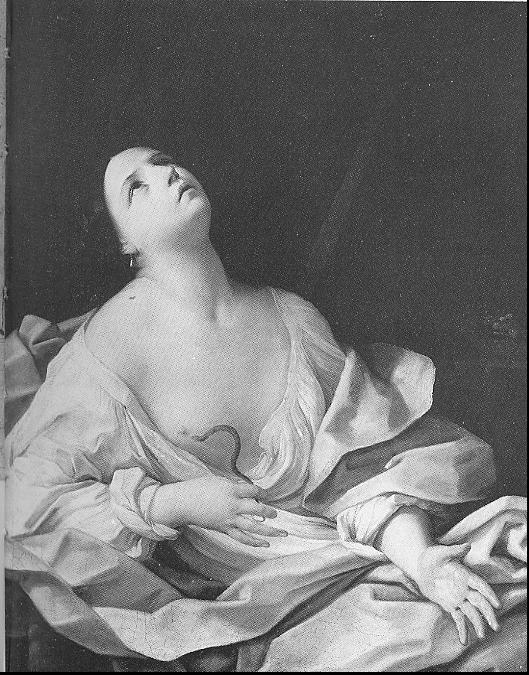
You know, I thought the last one was wonderful. I thought it was going to get me an invitation to the editorial board of The Dial. I braced for the impact of dozens... nay, hundreds... of learned letters about the ongoing Romanticism of lyric poetry.
Anyway, them's the breaks of the cookie crumble.
I am working on something much less fun in tone, much less lively in style, but much more socially useful. It's a discussion of why purity pledges continue to be demanded, despite always having been disasters for those proposing them. However, there is writing it, and then there is linking it, and then there is coloring it in.
I have written before about how, once we announce that we are offended and that we must be appeased, we have achieved the ultimate power, because the power to take offense exists independently of anyone giving offense. When our goal is harmony, instead of peace, then the most offended and most displeased person has power over the whole of the group.
Consider the United States Senate today. Its paralysis over the "notification to filibuster" is not only troubling because it says that the least happy have power to stop all things without having any necessary reasons or programs. The Republicans have not actually had any ideas for reforming health care. Their idea has been, pretty much, to stop malpractice law suits. That, needless to say, has nothing to do with health insurance. However, they feel perfectly justified in stopping all efforts at extending insurance, even efforts that they had once sponsored, under threat of filibuster, because they are not in charge.
Harmony and unison are not identical, and peace and harmony are not the same thing. Having all sides agree is not only not necessary, it is not beneficial. Having all sides cooperate is desirable, but they never will until they understand that they must honor an overriding rule that is above their individual good.
It's like pluralism. Pluralism is not relativism. Pluralism and inclusiveness is not the same thing as indiscriminate inclusion. Pluralism is a positive ideology, and it has within itself a principle of exclusion. "We allow in all groups, so long as they accept the idea of including all groups that are themselves open to inclusion" is the philosophy of pluralism. Democracy is not merely "the people vote," but rather "the people always vote to determine their government." Therefore, a democracy cannot vote to get rid of the democracy, and any vote to abolish the democracy is not democratic.
I feel like I have to point these things out, because too few people seem to know them. I feel that I need to state them rather than finesse them out philosophically because they are both axiomatic and elementary. One could take the time to work through examples and reason quietly over days and weeks to make the propositions likely, but these are, in fact, a priori within the concepts themselves. My only stretching is extending to the idea of consensual behavior. It isn't axiomatic or elementary, but I have come to believe that it is likewise inescapable that consensus means agreement when all sides understand that they cannot have their way. I.e. consensual politics, consensual corporations, consensual kindergartens, consensual communes, and consensual online editing communities are all possible only when each person gives up striving for her or his pure vision. "Consensual" is therefore an antonym to "pure" or "revolutionary" or "orthodox." The orthodox, pure, and revolutionary exist only with the application of unequal power.
I needed to do that quickly, and with none of my verbal playground stunts, because I want to talk about the auto de fe, the auto da fe, and how stupid people get when they're stressed out.
A number of conservative organizations are embracing purity tests, oaths, and other declarations these days. It has long been a feature of the conservative impulse, incidentally, as the very idea of 'return to glory days' means that one has the mindset that there is a largely invisible but inherent threat in the present, and 'return America/England/Australia/Canada/Sweden to its glory days' means that one believes that the present citizenry may be contaminated with beliefs that destroy the greater good. When this is combined with religious principles, the desire for a declaration is oddly unchanged. Many organizations associated with the Southern Baptist Church are now moving toward oaths, and this is merely the latest step in a curious evolution for a church that was once known as "the Independents" and criticized for having no unity at all. However, the way the oaths come in and the way they are organized is quite like the conservative "purity test." Instead of "creeping socialism" or division over Ronald Reagan, the presumption is that Satan is working inside those who will not sign or swear, as inward doubt is a mark of an absence of perseverance of the saints and grace (I suppose). Additionally, the institutions in question (mainly colleges) believe that they are "mission" oriented and therefore must convert, and conversions can only be performed by those who are "called" to be missionaries.
We need not dwell very long on the effectiveness of these instruments. It is self-evident that they do not work. They are like a net designed to keep the very large and the very small, while the middle sized get away. They succeed in keeping only the feckless and the fools, while the conscientious and convicted flee, and this is true whether they are applied in religion, in politics, or in culture.
What I think is worth talking about is why they do not work, and yet why people keep reaching for them, year after year, making the same historical mistakes, the same psychological mistakes, and the same cultural disgraces.
Does anyone here remember the hubbub of the flag pin in the presidential elections last year? It was all about wearing a pin showing the U.S. flag. Only patriots wore them, and anyone who didn't wear one was no patriot. Before that, there was a furore about the "Pledge of Allegiance." Back in the late 80's and early 90's, politicians vied with one another to say it loudest. They also made sure to sing the national anthem, or bits of it. It prompted me to think that the ministers of Lilliput, who had to dance on a high wire to get elected, were chosen on a more rational basis than conservative politicians in the U.S., because the public was more entertained by a high wire walker than these old white men trying to sing or look grave without looking dead.
Well, the thing about all such pledges is that they allow the certain to seek out a set of magical words, a set of words that, if spoken by the unbeliever, will cause the cursed tongue to burst into flames. They therefore represent a wish rather than a tool. They testify to the desire of the affected group, not the social coherence of it. A group can be entirely uniform in belief, completely loyal, entirely certain, and yet it can reach for the formula of the loyalty oath, the pledge, the confession of principles that all "real members" must sign or say or sing or dance (really, in some societies it's a dance). In each case, the invocation of the magic is a demonstration that the group feels like it is impure, is fearful that it is infiltrated, is nervous that its ideas or ideology haven't strength enough to survive a test (whether the test is foreign trade, education, free speech, open assembly, or discussion varies group to group and place to place).
When the Republican Party goes after a Purity Pledge, swearing to pure Ronald Reagan, they not only grant Reagan the apotheosis that Christian fundamentalists within the party really ought to object to, but they also seem to say that they are afraid that these principles are not capable of surviving in their party without such oaths. Particularly, the device is aimed at "accountability." A politician who "passes" the purity test (with its connotations of sexual inexperience being simply another troubling aspect, given that this is a party most dogged by closeted politicians and hidden pedophiles currently) can then be "held to account" when he or she casts a vote that presumably violates the pledge or test later. What's implied is that the pure principle cannot survive the jarring of practicality or negotiation. What is actually stated is that the demand is for inflexibility and "pure" or nothing.
It is this latter principle that ends up slashing the throats of those who devise such tests. The institutions, whether they're church affiliated colleges or businesses or political parties, that institute oaths and pledges for purity are stipulating a "not them" as the definition of "a good one of us." This is, first of all, an identity built on opposition, which is guaranteed to be absurd or tragic. Secondly, though, it means that the person who devises the oath is subject to the same examination by the next test giver. "Are you Baptist enough, friend," the test giver asks the test maker. "I see that you ask them to swear that the Bible is the inerrant Word of God, but you do not make everyone swear that it is the inerrant literal Word of God." In turn, that reformer is challenged, later, by another who can say, "I love the oath that you have devised, but you did not have the statement of principle say anything about how we all affirm the sanctity of unborn life, and we certainly don't want any baby killers around!"
Once an instrument of purity, or Puritainism, is in place, "purity" goes on indefinitely. Our friends the Menonites are pure. To them, the most fundamentalist protestant churches are hopelessly corrupted by man. Each element of a defining principle can become exaggerated to become an identity, and then a test question, and all in an effort to sort out the good from the bad on the assumption that the bad cannot speak lies and the good will never hesitate to swear.
"Auto de fe" is the original of what we now know as the "auto da fe." Originally, it was an act of faith. If you were sorry for your sins, you would show it in an act of faith. No one would tell you to, and no one would tell you how. The confessor would simply watch to see if you did something that showed that your faith was back so that he could be sure that you weren't paying lip service to the oaths. You see, the old church folk actually knew that people could be forsworn, that bad people had no problem swearing that they were good, that people without conscience would gladly swear to whatever was convenient. The auot de fe was not a test imposed by anyone, but rather a sign manifested by the will of the person.
Well, we all know what happened. Once the institutionalized fears came in, once the Roman Catholic Church became convinced that its ideas might not stand up in free interchange, they adopted tests of faith. Then came hunts for heretics. Then came increasingly elaborate tests to prove that a person was or was not serving Satan or Martin Luther. Then come the Inquisitors. After a person was tortured, that person would sign or say a grand confession in public, and this was the auto da fe. What had been a sign from the person became a testing outcome for assessment.
It's sad, amazingly sad, to see tests come in like this -- tests of the soul, of the heart, of the mind. It's sad, deeply sad, to see Christian schools, particularly protestant ones, adopting, increasingly, oaths, as if unbelievers will not sign or that they will somehow demonstrate their non-belief. It tells us that the groups at the helm are afraid that their faith is not strong, that their ideas cannot survive free exchange, that they believe that prosecution is better than construction. What's more, it tells us that they are, in their fear, willing to forgo looking at a person's expression of faith in favor of demanding a formulaic satisfaction of a ritual.
If the Republicans want to be a party again, they need to have dissent, debate, and discussion, and not purity. If protestant churches want to triumph, they need to have faith -- faith in the power of Christ, power in the Word that conquered the world -- faith in life's diversity and the glory of God who creates not in one type, one model, or one mold, but in endless variety.
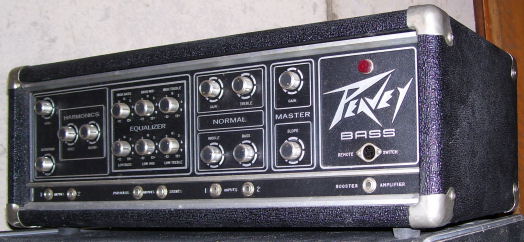
Once upon a young sap rise, upon a stripling, I sat at the Smith-Corona with Red Man chewing tobacco in a cheek, beside a Peavey 400 Watt bass amplifier stack, and wrote, all night long, at poetry. The poetry that emerged, when I was fifteen through seventeen, was exceptionally anxious, as if a compensation in workmanship for the slapdashery of my surroundings and habits and habitus, and then I had a psychotic break known as college. Actually, the first year of college did not teach me much, in this respect, but it let the little maniac driving the poetry get a concussion, a skinned knee, and then, finally, a complete break. When I did not learn my lesson or win my freedom, the poetry that I wrote from ages nineteen to twenty-four was calculatedly anarchic, indebted, frustrated (sexually, physically, emotionally, and financially), and a long form code for the puzzlement of how a world that works so well in other respects could be so utterly lunatic for humans.
If you looked through the whole of this blog, you would find evidence of why "poetry" is "wrote" and why this is to the greater glory of the world. You would discover that having written it is the best thing for me and for you, alike.
(A creek in Baltimore that is much safer now that I will not pollute it with metaphors.)
However, all of those years meant I approached the curse the way that a pre-menopausal person does: as a sufferer, and therefore as a person trying to make the best of it. I always wanted other people to recognize just how bad it was (and by that, I mean how wonderful the poetry was, for poets are driven by the depths of their pain or the severity of their visions or the power of their philosophy or the height of their molehills), and I could never find anyone else who would really get it.
Well, there's nothing for it, if you're a poet, but writing a manifesto. If your poetry won't get your readers (those afflicted looking people otherwise known as friends or students), then a manifesto might do it. Of course, what you, the poet, never realize is that you're waving a white flag, that you've failed to enunciate things in your own medium (poetry, painting, appearing shaved and naked in a public fountain -- whatever your art is) and have resorted to prose and political programs, but nevertheless it's really, really attractive.
Mine was: narrative voice, war upon, hatred of, destruction to be wrought.
The social drinker trying a drunken, stoned verse form was one disguise. Another was the schizophrenic eliminating connectives. Another was the pre-verbal infant with atemporal descriptors of action. Henry Green's dangling modifiers as a method of suspension really appealed to me, even though that was theft. Finally, I thought description without action might do it. Aside from all of these things having been done by other poets, all of these things had failed in the hands of every writer of every form (except Green, and one wouldn't want his bank account). Additionally, each of these was not merely tried, but done successfully every single day by actual schizophrenics, autistics, drunks, infants, and Alzheimer's patients. My self-hatred and hatred of the lie of writers and the false "history" inherent in narrative was hardly an excuse for emulating Dustin Hoffman in "Rain Man."
Fortunately, though, I got better. Poetry might not be a disease, but being a poet as a young person is certainly co-morbid, and I was cured of poetry by a great, vast, yawning horror, on the one hand, and getting my personal oil pan filled to the requisite number of quarts, on the other.
(The shelf fungus is in the tree from seedling but only grows when the tree is down)
Now the days are no more when I worry with contributing my voice to the world or my wisdom to the lifeless sea measureless to man where the drains go. (The Dear knows no one keeps, hears, or profits by wisdom, even the wisdom of "In all thy getting, get thee wisdom," (Prov. 4:7; all the fundamentalists in the blogosphere seem to get the citation wrong or not know it at all) so it flows out from life, from experience, from meditation, and goes down to the sunless sea.) However, I again have to mess with poetry, but this time from the outside, as an hygienist with a dental pick.
Recently, I was explaining "Kubla Khan" to a class of students, and I did the advanced thing. I explained that the foreword should be there, that it's part of the poem, that the poem isn't a fragment, that the poem isn't about the son of Genghis Khan at all, that the poem is about poetry and creativity, etc. Afterward, I realized two things. First, the students were going to wonder about Coleridge's Christianity, because that's the kind of place and region I am, and that, more broadly and generally, they were going to doubt that Coleridge "meant" for the audience to understand all that. If I could convince them that the poet did expect some audience to "get" it all, then they were going to have every right to ask why someone writes a poem with that much philosophy and theory in it, and that started me thinking, and the fruits of that thinking are here in this blog.
Well, not so far, but in the next bit.
"Selfishness is the greatest curse of the human race" -- Gladstone, 1890
The Romantics set out their manifesto, and they called the tune for a lot of what has happened since then. In many respects, poets today are still Romantics. The 1798 "Preface" to Lyrical Ballads does in prose what the poets had apparently failed to do in poetry: start a movement. Let's remember that that's the preface to the second edition. In other words, the book had been out, but it wasn't Romanticism until they explained it.
I won't go on about that, but I will point out that the one formal feature that the Romantics announced was a re-invigoration of the lyric. Now, a lot of this is horse flop, because the whole Warton, Percy, Gray, Thomson stuff had been doing lyric, but this was a manifesto. The lyric is in. The lyric is it. The poem of personal emotions recalled in tranquility is The Poem. In fact, most people, when they think of "poetry" can only think of verse about the author's emotions. They can't even conceive of any other thing being poetry. That's how completely we are Romantics.
Once the subject of poetry must be the poet's reaction or psyche, then there is no choice but to start looking for interesting psychological states, reactions, and persons. Let's find the emotions of uneducated people! Let's find the emotions of victims of abuse! Let's find and then express the emotions of Seers, and let's demand that poets have super-duper special emotions to express. After all, even lovers of such poetry recognize quickly that the general run of emotions that are commonly felt are commonly expressed, commonly adequately; therefore, poets either needed to be scientists about perception or philosophers of feeling or radicals of sensation.
Stupid people, and never underestimate their number, read "Kubla Khan" and started taking dope. Stupid people, and never underestimate their persistence, began putting themselves in dangerous and meddlesome positions to collect "experience." As graveyards and psych wards fill, and as poetry becomes handmaid and gateway to psychiatry, both the arbitrarily intellectual and the gluttonously sensational run out of things to fuel them. (I never had the courage for the latter or the originality for the former.) The quality of the poetry itself is irrelevant, if not impossible to determine behind so many assumptions of reception and production.
So, young poets, do you want a manifesto? I have one for you, in all seriousness. I have great love for poetry, recite it to myself nearly every day and read it without being asked, and I read contemporary poetry as often as I can, and so I make an offer -- an amicus brief.
If you want to revolutionize poetry, write social verse. If you want to change poetry, return to satire. Try odes. Try any form of occasional or public verse. Evacuate the ego from the attempt and replace it with the common good, and see what happens. Replace the personal desire and Desire as the subjects with Classical or Abrahamic virtues and see how those work as motives for poetry.
If you are trapped by social and political language, and you absolutely are, then poetry is a political and social act, and not by any means, ever, a personal one, unless you have the good sense, as I did, to quit it. The only personal element is saying "no."
KFC, which used to be Kentucky Fried Chicken, which used to be Colonel Sanders's Kentucky Fried Chicken, is running a television ad that simply will not stop. The theme of the ad is "Unthink." In the midst of snap cuts, the voice of Chris from "Northern Exposure" speaks without a pause, and the camera slams from close up to two shot to three to close up, to twirl about the product, to zoom on faces, to smoke from the hot food, and out and back. The camera work is like the party scenes from "Laugh In," when they wanted to show the go-go dancers, or like a kung fu fight scene, when they have a heavy set actor with hands softer than newly hatched ducklings and the director makes up for it with a stop-motion montage of poses that give the illusion that someone is actually moving.
It is absurd, of course, that they want us to "unthink." One can imagine the advertising pitch meeting: "Our goal is to get the consumer to forget everything they think about KFC. They think of us as grease and fat. We want them to un-think those thoughts."
One could note that this is taking place even as the Republicans are trying to get us to unthink in the same way, which is to say forget, everything. For example, they maintain that the economic collapse is after Obama's inauguration. That is flatly not true, and they know it, but that's not the point: the point is to unthink. From polls that add up to 165% to disagreeing with themselves to being for pay as you go, until it's proposed by the president, there is a campaign of relying on public ignorance of what goes on in Congress or a campaign to cause unthink.
However, it isn't merely the "unthink" that gets me. Chris from "Northern Exposure" (when the actor is just a voice over, he's Chris from "Northern Exposure," since that was his use on that show -- the voice of calm, of philosophy, of moralizing, and therefore the actor providing a voice over for restaurants is curious and challenging) reads copy that requires unthinking, too -- unthinking the English language.
What Chris from "Northern Exposure" promises us, if we merely go into KFC, is the exciting opportunity, once we manage the Zen Koan of UNTHINK (possess nothing... hold emptiness... think the unthought) is that "great fall off the bone flavor." Now, synesthesia is fine. I have no problem smelling a beat, tasting a vision, or feeling a fart, but I do wonder what the taste of falling off "the bone" is.
Is this the taste of gangrene, or merely necrosis?
There are some of you without access to U.S. television sets, and many more who have not seen this campaign. To you, I say, "Congratulations." In fact, my topic today is, of course, to respond to the monumental insult of this campaign, but I cannot see it in isolation. I see in it either a profound laziness and unthinking response on the part of the client (KFC's marketing chicken wing), or a very nasty coalescing of cultural currents, whereby many are now concluding that Americans are not only extremely stupid, but that they are incapable of being otherwise, and "thinking," "thought," "knowledge," and "English" are alike detriments.
Consider the Tea Party jackanapes. These creatures are bizarre. They showed up, spurred on by FoxNews Channel, to protest Obama immediately after his inauguration -- before he had any legislation passed -- to protest what he was doing. They were supposedly protesting all the taxes he was inflicting, even though he hadn't proposed, much less passed, a single tax. They screamed their anger, carried guns, flirted with the Lyndon LaRouche crazies, mixed libertarian, racist, GOP loyalist, racist, and independent deficit hawks together, and they were funded by Dick Armey. See their attempts at a convention. They were angry first, had the reasons second.
Thinking and facts, reasons and reasonableness, were not appropriate. Those things were either afterthoughts or signs of, as with Sarah Palin's discourse, "Gotcha journalism." Questions were all traps, and knowledge was all unnecessary. The emotion was real, and that was sufficient.
I would like to formally apologize to Ford Motors and to Nissan. I did not purchase a 2010 Ford Fusion hybrid, the way I planned to. I am sorry. I had a slight windfall from my summer teaching, and I planned to use it for a down payment.
(I know that I've used that photo recently, but it's more germane this time.)
I could explain why I didn't use that money for the down payment. The Cash for Clunkers program was going, and many people were saying that there simply were no good cars to get at that time, that the fuel efficient vehicles would not come to market for a year or two. Oh, I once told someone that I wanted my next vehicle to be a Chevy Volt, but I was joking. After all, I suspect that the Volt will never exist.
In fact, if anyone who reads this knows a journalist, would that person mind suggesting a topic of investigation: the Chevy Volt. It would be dead easy to track when GM has made press releases for the Volt. Simply put those in one column of a word processor, and in the other column, track gasoline prices the week or the two weeks before. Then look at the releases/sales of fuel efficient vehicles by other manufacturers. I would venture a thesis that General Motors will never produce the Volt, that it is merely the "clean coal" of GM: a public relations device designed to keep the public and press from asking them why they have no fuel efficient vehicles available for sale in the U.S. I could be wrong. They only have to make the car to prove me wrong. I doubt they will, but a journalist could help matters (and the country) by making this bluff more well known.
Anyway, news began to reach me that my job was not secure. Then word reached me that my employer would no longer make contributions to my retirement. Then word reached me that my employer was going to "look at" health insurance. I knew that meant that the prescription plan would go the way of the Dodo, or at least the way of the Buffalo (rare, expensive, dangerous). I held my money in fear and spent it on books and CD's and pills and car repairs.
"What a jovial and merry world would this be, may it please your worships, but for that inextricable labyrinth of debts, cares, woes, want, grief, discontent, melancholy, large jointures, impositions, and lies!" -- Corporal Trim to Uncle Toby
I also need to apologize at the same time to Nissan Motors. I have owned Nissan cars before. I cannot say that my Datsun 310 hatchback was an especially happy relationship, but it was a long relationship. If a marriage is miserable, at least it might be long. (I got rid of it for a Subaru that made me very happy. That car was everything my Nutsad was not.) I am willing, more than willing, to believe that the 310 hatchback I had was the worst Datsun ever made and that I was unlucky. I am ready to love again, and Nissan is about to offer something that would make me very, very, very happy: the LEAF.
I want that to be visible again: the Nissan LEAF is going to be an ideal second car.
97% of Americans drive less than 80 miles in a day.
Most of us drive less than 60 miles in a day.
So, a totally electric car that goes 100 miles on a charge will mean all of your daily driving without using a single drop of gasoline. It means being in rush hour driving with no noise, no stink. It means an acceleration curve that can only be beat with a drag racer. It means going very fast. It means going for $0.02 per mile. My current car gets 29 mpg, and I drive for $0.09/mile. It means that it's the equivalent of gasoline costing $1.00 a gallon.
If you have trains or planes, you can take those for your long trips. If you have a second vehicle, you can use that for your long trips. The LEAF is going to cost the same as any other mid-sized sedan.
I want it.
I won't get it. I'm sorry.
Ok, so I'm poor. We'll grant that at the outset. I make less per year, net, than the car will cost, probably, or just about the same. That's one factor. The economy is scary, and my job is scary, as stated above. But that's not what I wanted to say. If I wanted to say that, I would only be saying what everyone says.
Instead, I wanted to point out to the auto companies that I have already purchased a car, despite not having a new car. You see, I have to stay alive. To do that, I am assured that I need to stay on male contraceptives, heart thinners, scab breakers, sugar eaters, and palliatives. Now, lets take all the co-pays and the "premium non-formulary" charges and add them together, and then lets take the charges for the insurance premium itself and add that in. Guess what? It's more than a car payment.
Ok, and then let's toss in my foolishness, my luxuries. We'll take my satellite radio per month, my Netflix per month, and my ISP. All of these are small. None hurts. Why, it's piddling. I can afford it! Let's add them together, though.
The point that I am making, here, is that economists wonder and manufacturers fear and fume that Americans are not purchasing. Oh, yes we are. When our purchases, our major purchases, are already made in the form of maintaining our lives, we're not buying cars. When the majority of us are indebted to live, we do not live beyond the debt.
Do we wish to? Oh, yes, but others have already calculated exactly how much we have left after our food has been consumed, and they have already taken it from us. If you want us to buy cars, work for prescription reform.
Years ago, when amateurism looked like something new, when it even seemed like an invention or discovery worthy of Time Magazine's yearly benevolence, I wrote -- and Heaven help me, enjoyed writing --an article on film adaptation. (I did not want to be part of a social revolution. I wanted to contribute knowledge to high school students who use the Internet for everything.) I enjoyed it for the pleasure of analysis, which is the complementary joy of English composition. Composing (writing) is bringing the stray herd of words and ideas together and making them all behave, making them function toward an end. Analysis is the breaking down of objects, and I love to examine and re-examine and then recombine. (My next will address how sad it is that such a fundamental concept as the difference between synthesis and analysis is forgotten and consigned to Philosophy class, when it's everyday knowledge. It could even be Business.) It is why we speak of "creativity," after all, for the ability to make a new thing from the old is as near to creation as most of us who lack plastic skills will ever get.
(A chimp has the ability to know that its reflection is an image of itself.)
In that article, I said that film adaptation (well, I implied that I said it) is not properly judged for literalness or inclusiveness or total fidelity, that a film is a separate artwork from its source and should function accordingly. How, then, is it an adaptation at all? If your movie of "Along Came a Spider" isn't going to try to be the same as the book I read, then how is it an adaptation? Well, I implied that films are adaptations of a thing in the original, not the whole. One adapts the theme, the aesthetic, the plot, or the worldview of the original, and then one employs the devices and strengths of film's art to do the thing the source did, whether that source was a ballet or a cartoon. One judges the adaptation by the achievement of the sameness within the newness. (It's like composition in that regard; the same words, but a new arrangement.) You keep the plot of the novel, or you achieve the same philosophy as the novel, or the same "point" as it, or the same worldview, or the same "effect" as it, but you use what film does to do it. If you succeed, you have adapted (made to fit). If you fail, you have not.
Adaptation is, therefore, an analytical composition. (The sentence in the Wikipedia article now saying, "it is derivative" was not mine, but amateurs are amateurs, and there's no stopping the boobAsp -- someone with a mania for categories and containers and little interest in the substances inside them -- from stomping along after one writes. I was ever comfortable with impermanence, as the achievement alone was my thrill.)
Alles klar?
There is a "however" coming in this essay. The "however" is with interesting people, like Stanley Kubrick, and dullards, like Roland Joffe. Kubrick's "The Shining" violates the plot, aesthetic, and theme of Stephen King's The Shining, but it's a better film than King's novel is a novel. (Some people say the same about his "A Clockwork Orange," which absolutely violates the intent and worldview and theme of Anthony Burgess's A Clockwork Orange, but I feel that both novel and film are great.) Kubrick's film is not the same at all. It is, in a sense, not an adaptation. However, his artistry and intellectual heft and cultural timing were such that we among the intelligentsia and literati and professoriate forgave him, blessed him, and honored him, and the cinephiles, who never cared about the source works to begin with, carried him about on their sloped shoulders, moth larvae and nits in a displaced nimbus around his frenzied comb-over.
Stanley Kubrick was an interesting person. He was canonized, in the academic sense. He became a lesson in film school, and dull wits always learn the wrong lessons from school.
The problem with dullards is that,
"Some are lost in the maze of schools And emerge as coxcombs Nature meant for fools." (Pope)
The follow along directors after Kubrick are a loutish lot, half aware, half there. Where he could ignore almost everything Stephen King wrote in order to return to his solitary theme of the duality of the human psyche and civilization's Jungian shadow, he could do so because American, and western European society, was wretched, like Alex de Grand in "A Clockwork Orange" hearing the reminder of his cultural heritage, Beethoven, with the very same theme. How does a world of urban and urbane and polite and political deal with the shuddering bulk, the terrifying grin, the ravenous evil, of holocaust, genocides, and laissez-faire starvation?
[It's a long explanation. I urge you to look at some of the books on Kubrick. The author of The Short Timers, the collection of short stories upon which "Full Metal Jacket" was ostensibly based, wrote an essay for Esquire or The New Yorker or something that I read some years back that talked about his conversations with Kubrick during the adaptation and Kubrick's obsession during that process with Jung. That obsession, whether articulated in Jungian terms or not, is present throughout Kubrick's films. To be too brief: imagine that we have an inherited savage in our subconscious, a violent, gleefully hateful thing that is not the "id," but the negation of civilization. Civilization has to let that creature out in a safe form, if it is to function. Individuals in tightly controlled and anesthetized societies must reconnect with the savage, or else the savage will emerge in a crazy way. Wouldn't it be a good thing for a Jew after the war to examine that, to see in the holocaust and Mi Lai alike an expression of the savage in every apple faced youngster? Wouldn't it be good to take intellectuals, the ones partly to blame for the rise of the mechanized evil of the Reich, and make them confront their own culpability? Don't believe me. It's ok. They're just movies. The point is that other people think this is happening and so are happy to see a novel by Stephen King turned into a meditation on how suburban marriage (and what would become the main text of "Fight Club" as the "feminizing" of men) can be another control that is susceptible to the Shadow.] The little shoal of broken heads, scattered wits, and eager tits known as the other directors married the self-congratulatory Film World with the despair-induced coma of post-Modernism ("post-mortemism" is an old joke, but I think there's merit to it, because post modernism is not merely a collection of works without a manifesto, a series of nervous tics without a disease, but it is also a profoundly despairing "movement," in that it proclaims the vaccuum of Movement art; whatever emptiness we may now see in movements, giving up the effort is rather cheap) to announce "Whatever it is, it's alright." Oh, Donald Kaufmann's "Adaptation." doesn't count, so don't even bring that up.
No, if you'd let me...
Look, it's just that it's...
Ok, fine, let's do talk about it. "Adaptation." doesn't count because it is an examination of adaptation. To say that it is an adaptation that examines adaptation is incorrect, because the adaptation within the examination is merely more cogitation. As a film, it is purely discursive. There is no "inside" to it at all. The film is completely outside itself at all times. Every element of the film, whether visual or spoken or gestured, is not a reference to a world, but a reference to potential references. Each thing is a question, not a statement, and certainly not a statement about the art object that is putatively source.
Now, can I proceed?
No? Well, we'll have to argue about that particular movie some other time, then. Better yet, go to Film Comment and get cheers from the chorus. Meanwhile, I'll while away the mean.
So, these vacuoles that I'm referring to -- wretched creatures like the "remake" of "Wings of Desire" into "City of Angels" or "Bedazzled" or "Wicker Man" -- and the "adaptations" of works of literature like the Roland Joffe horror shows "Fat Man and Little Boy" and, of course, the most flightless, bloated, emetic turkey of them all, "The Scarlet Letter," passed themselves off as "different artworks." Anyone who complained that they had done violence to their originals got dismissed the same way that a fanboi is dismissed for saying, "But Rochester should never have blond hair!"
Because we had recognized that adaptation was not literalism, the film world had taken that as license to "riff on" source material. Because post modernism had used history in original works (like Mason & Dixon by Pynchon) freely as a metaphor, and because commercial media had begun to re-spin source tales over and over again (endless Christmas specials with the same Scrooge-vision for the regular characters of one's favorite TV drama or comedy), film makers had decided that the historicity and factuality of the source had no relevance. In fact, repetition or fidelity was "square" (or, when Gus van Sant did it in his "Psycho," "super post modern"), and so it was the duty of film makers to prove their artistic mettle by artless meddle, and every person unappreciative could be, should be, and must be, one tribe or another of Philistine.
What, then, do we do when new works, completely new works, use the names of old works? Do we say these are adaptations, when both the creators' intent (announced, usually) and execution are not to adapt any aspect or element of the original, but merely to "riff on the classic" or "tell a story the original author didn't get?"
Let me put a case to you away from film to make it clearer. Rod Stewart, who is a fine soccer player, sang a version of Tom Waits's "Downtown Train" and had a top 40 hit, back when there were such things. Stewart's version reiterated the chorus quite a bit, as well as introduced an orchestral marshmallow in both speakers to occupy any quiet, and his producing machine also made sure that there were sweeps of sentiment that simplified any possible irony. Waits's song had been complex, melancholy, and even bitter, and Rod's song had been a rendezvous between lovers. Stewart said, though, that, while he respected Tom Waits, he thought he found things in the song that Tom had missed. So, folks: is he "riffing?" People who would hesitate to object to a violently free film will quickly sneer at Rod Stewart's comment, and yet he kept all of the same lyrics and generally maintained the chord structure. He changed the aesthetic of the song. He kept the frame and changed the heart, because his purposes were different from the original purposes.
Ok, so here's my position. When you adapt, then that's no big deal: you adapt. When, though, you "riff," you have some duty to acknowledge that you are creating a new artwork by creating a new title. If you wish to muddle about with the Gawain story to make it fit the 1950's audience, then have the grace to call your title "Prince Valiant."
Microsoft did a very, very evil thing some years ago when they decided that Java's cross-platform programming language was a threat to their goal of One Ring to in the Darkness Bind Them. They wrote their own version of Java that would run only on Windows machines. This was known as "polluted Java." They released it free, and all sorts of polluted Java got out. It was like a virus, some thought. The biggest thing is that people couldn't tell if they had "real" Java or polluted Java applications, and so they couldn't tell, without laborious testing, if their Java applications were cross-platform or not. Well, an "adaptation" of "The Scarlet Letter" that has Hester and Dimsdale grooving in the woods while Micmac Indians teach the Puritains how to tolerate is polluted art.
"Riffing" on Beowulf is your business. Have a ball! Prove that you have no slavery to history (or fact) by simultaneously insisting that Christian influences in the work are not historical (thus belying your historical freedom as a post-modernist) and thereby continue the work begun by the Nazi scholars but now in the name of your Robert Graves quoting Wiccan friends and merging "myths" from different continents, centuries, and ethnicities in the belief that there must have been some gigantic vanilla porridge of Story underneath that you -- you clever dickens, you -- can decode. Go on! Have fun. Be a director who claims that Beowulf bored him at age 14 and therefore it is a boring work, and be a man who is so filled with satisfaction and self that he cannot realize that he has just admitted that his mind has not grown from early puberty. Go on! Get money for the project. Work with sinews and CGI to erect hundreds of thousands of tent poles in theater seats, and mistake that for interesting -- but do so under the banner of the U.S.'s PG-13. Declare artistry while feeding a multi-input, single-output media machine, and hope for a Christmas release and lots of dolls to be sold. Go on!
Do NOT call it "Beowulf," though. Call it "Wild Wolf, Monster Slayer" or "She Dragon: It's Really Hot in Here." Call it "Handsome and Grendel."
What is being done is not, simply put, adaptation. What the film makers are doing is not any attempt at adapting. It is an attempt at taking a title, of replacement. Roland Joffe wanted to replace Hawthorne's tale with his own, and Gaiman, the pleasures of The Graveyard Book notwithstanding, is not to be forgiven his involvement in the theft film of "Beowulf." As technology has allowed films to tell impossible tales faithfully, film makers have decided to cease even adapting. By itself, that would merely leave room for future films -- a future "Lord of the Rings" trilogy -- but it is combined with a gleeful kleptomania and pollution.
Film makers, know this: Post modernism is no cover for theft, and it is no excuse for being a polluter. If you will not adapt, then do not steal. If you will take a name, then be aware that you risk pollution. There are stakes on the table, and some of us still care.
There are items in the cultural inventory that are not disposable. That is one of my objections, and I won't hide it. "Riffing" on a James Patterson novel does not bother me as much as "riffing" on George Eliot. The reason is not any dead white European snobbery, either, but rather than some items exist in a web of reference that constitutes culture, and when we release "polluted Java" into the stream, we are contaminating culture. Additionally, though, the simple fact is that this is not an act of adaptation. It is an act of erasure and rewriting. When the author or or studio executive has that in mind, then the result will be a new thing. It's much better if we notice that The Lion King is Hamlet than that Disney studios called it "Hamlet" and made it with cartoon lions singing Elton John songs, while they claimed that they "saw things that Shakespeare missed in the story" or that "Shakespeare is boring" and so they wanted to improve on it.
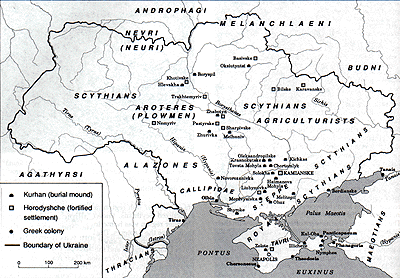
In Scythia, Bactria, and Colchis, we have innumerable problems. We have one of those tipping points in history where things have gotten flopped over, where offense is greater than defense, or defense is greater than offense, or where the methods of crazy are better than the strategies of police or polite. Something is wrong.
Never fight a land war in Asia, the man said. Well, sure. How about a vertical insertion?
Right now, the United States has a new decision on Afghanistan, not an old one, and yet we seem to be confined to speaking only in metaphors and language from the past. I am going to break with every single practice I have ever had, as a writer, and speak directly about a foreign policy matter. I will explain why I, and why I believe we as humanist and pluralist nations of the West, have to engage with the problem of Afghanistan. I am aided in this by the fact that the people who propose pulling out of Afghanistan are actually arguing for staying in place, but I am hindered by the irresistable poisoned honey of historical analogy.
First, let us deal with the one analogy that everyone will invoke sooner or later: Vietnam. Afghanistan resembles Vietnam in its political regime. Karzai, in the analogy, is either President Diem or, much more fittingly, Durong Van Minh, the corrupt leader who allegedly made deals with the Vietcong. Afghanistan is also supposed to resemble Vietnam in that the insurgency is “out there” with aid from another country and employing terror to paralyze and then capture the food/drugs of the nation. Supposedly, the U.S. military, which was supposed to have flubbed Iraq because all they did was learn lessons from Vietnam, is now incapable of dealing with Afghanistan, because it is just like Vietnam. Finally, Afghanistan is like Vietnam in that once we begin sending troops, we will be bled constantly by a defensive posture (either because we won't “get tough,” if you're a neocon, or because our brutality radicalizes the population, if you're a realist or suffer from sanity).
The problem with the analogy is that the President is right: it requires a faulty reading of history. Afghanistan is not in the same situation at all, and the Taliban is not offering communism. It is offering efficiency at the cost of freedom, fairness, and personal identity in a land where personal autonomy is vital. The defensive posture is always a problem, because it's always easier to inflict damage on a defender and run away than it is to obliterate a mobile force. This is why it was easy for the U.S. forces to take Afghanistan in the first place. Attacking someone who is trying to defend is easier, these days, than defending against someone who can come from any direction, including up or down. The problem of the Afghanistan government is critical, absolutely critical, because it means that the Afghani villager gets to choose between vicious efficiency or kleptocracy and insecurity. People may face dangers, but not for shabby treatment. Even with that granted, though, Karzai is neither Diem (the man who tortured his own people in his anti-communist crusade) nor Minh. He infuriates his people by acting like a tribal man, an ethnic man, and a war lord's friend, but not by being a tyrant. (Malaki in Iraq, incidentally, bears scrutiny that no one in the U.S. is giving. We so want that to be over that we have ignored another Very Bad Situation in the making.)
All of the mottos about Bactria the inviolate and inconquerable (Alexander the Great), where Napoleon and the British could not win, where the Soviets could not prevail, are beside the point. First, the U.S. demonstrated that its military could take and destroy the military and political leadership and civil institutions of the area. In fact, NATO troops could easily defeat any military Afghanistan ever were to develop. It's not even a battle.
Can any foreign power govern Afghanistan, though? That's the question our cliches haven't addressed. That's the question that gets to the heart of the case. Afghanistan had a centralized government in the 1970's. Although this was a brief period, it did exist. Prior to that and since then, tribes and ethnicities have opposed one another, and groups that migrated in or practiced religious variations six thousand years ago refuse to treat one another as fellow citizens. Karzai wants to help “his people” who speak his language and belong to his tribe, and other groups want theirs. He lets murderous creatures disgrace him and destroy governance because they are of his tribe. This is an educated individual choosing to adopt an atavistic model for social organization, a model that has within it an eternal animosity toward central government. It has deponent governments -- little centralized decision bodies -- based on the tribe and family, and it bears some resemblance to the satrap, but with no personal, blood, ethnic, or religious commander above the unit. It is pre-nation-state.
So long as all of the “leaders” of Afghanistan are leaders of tribes and populations, rather than leaders of places, districts, and persons – so long as geography and isolation mean that it is a set of perpetually warring tribes – no nation may govern Afghanistan, and there is no Afghanistan to govern itself. The very name is an arbitrary distraction. If we know for certain that there is no hope, in fact, of any 1970's Afghanistan ever emerging from this generation, then we would be better off thinking of districts and populations and fighting, organizing, building, and negotiating separately.
The Taliban introduces theocracy, but theocracy is vague. There is no magic in that. If you believe that there is something so mysterious about “theocracy” that we can only deal with it in the discourse that it sets for itself (holy war), then you need to look at your own history. All of Europe had experiments with theocracy, and the United States has had multiple adventures in theocracy (aside from Bob Jones University). From the Massachussetts Bay Colony to the Shakers, the U.S. has had its theocracies, and it is easy enough to study how they interact with stresses from outside. In general, they thrive most when they have an enemy. The best way to fuel a theocracy is to put on a Great Satan costume, for then you seem to justify the founding assumptions. Avoiding offense is impossible (see the rewards President Obama has received from trying to avoid offending Christian Fundamentalists in the United States: they call him the anti-Christ and see in his politeness proof that he is trying to fool them), and so the best way to win is to simply not play. Refuse to speak of winning and losing, of conquest and triumph. Do not speak of yourself at all. Speak of the population you are there for.
As for whether or not we must be there, when “it is impossible to win,” we must be there because it is impossible to win. Every person who makes the case that no army can prevail in Afghanistan reinforces the argument that our armies must prevail in Afghanistan.
I opposed the Iraq war. I was and remain ambivalent about the Afghanistan war. However, a nation-sized hole in the earth where the world says “No army can prevail” is very bad. There must be no such place. Somalia, the grand shamble of “failed states,” is very similar to Afghanistan in its tribalism, in the way that each group fights for its group identity and has no concept of a nation at all, but Somalia is, obviously, no place that world opinion regards as impenetrable. World opinion holds that Somalia could be “taken” in weeks but that it has no value to the world.
Afghanistan is important because we have said, for thousands of years now, that anyone who goes in there is safe from the nation states of the world. If you can get permission from the tribe (not the nation), you can do anything you want in Afghanistan, from grow opium to plan attacks on world trade. In the past, the stakes were not very high, because the thing that made one “safe” made the world “safe” from you, too: geography meant isolation in both senses. Now, though, one individuals can go in, embed, train, and, because of global transportation and trade links with Pakistan, India, and Iran, and because of proxy fights, fly away easily to fight elsewhere on a one-way ticket. Thus, if we say that Afghanistan is a place where one can be invulnerable, then the world's populations are all in danger, regardless of the threat. If al Qaeda were to disappear tomorrow and Osama bin Laden were to recant and repent, then the danger would be the same. The world's nations must not allow there to be a place that will refuse to organize and yet still benefit from global access and travel. That makes for a case of offense being far more powerful than defense.
Time is one of those things that isn't a thing at all, nor a quality, nor a process, and yet we speak of it, without any qualifications on the subject whatever, beyond the qualifications of a citizen.
"...the Brain, in its natural position and State of Serenity, disposeth its Owner to pass his Life in the common Forms, without any Thought of subduing Multitudes to his own Power, his Reasons, or his Visions...." --Jonathan Swift, A Tale of a Tub
In our natural state, we know time without knowing of it. We feel it without comprehending it. In fact, although we teach our three year olds how the big and little hands go, we say that we teach them to "tell" time. We "tell" time the way we we have "more than words can tell," the way that "tellers" work in a bank or the "tiller" holds the money. It is, of course, to count.
We marvel that prehistoric societies, whom we picture in our swinishly ethnocentric minds as possessed of the intelligence of three year olds, built megalithic clocks and told the seasons. Those clever people, we think, had such importance for the seasons that they piled up mounds to mark planting day. We solved the matter with a simple computer chip, after a master horologist fought a lifetime against metal rockers and springs to build the H4. A cricket escapement! However, there is little to marvel at, except that the two accomplishments, the microchip and the megalith, represent different organizations of time in life to measure time on life.
The shock we rugged individualists experience when we gaze upon megaliths and metroliths, is nearly always the same in its expression. After the "wow," the slack jawed, shutter snapping, goofus nearly always says, "How'd they build a thing like that?" This betrays an internal dialog. The tourist is thinking about what life must have been like in 100 BC or 3000 BC and how it would have been to chip away at a mountain, or to tote rocks, or to toss dirt, day after day, with no clue what you were doing, because some mysterious guy assures you that there is a purpose. It would take generations to finish. It might take centuries to finish. At the conclusion of all of that work, the other average Josephines and Joes would have not a hint as to what it was that their parents had built. It would be big, alright, but the measuring of time? Nah. Not for them.
On the other hand, the same average person who breaks his LCD watch open with a hammer and seeks what's inside gets treated to a little plate of magic. A tiny, green magic platter makes time go. Some mysterious goo oil floats in a crystal dish, and then this green thing is behind it, and that there is the battery. The work can be seen under a magnifying glass, and it shows all the marks of the work of giants. Shamans built this device. Magicians made it go. Wizards worked the enchantment of miniaturization.
We call this magic, we sum up all of this skill beyond comprehension, with a single word: genius.
The Harrison clock is a work of genius. The microchip is a work of genius. The design of the geosynchronous satellite is a work of genius. The use of frequency skipping algorithms is genius. By "genius" we encode not merely greatness but solitude, and therein lies the difference between the megalithic calendar and the modern.
We organize our efforts at telling out the time by the individual. The child will learn to count out the personal time, and the applicant will be on time for the job interview, and the student will finish the test in the specified time limits. The clock will come from the clock maker. I suspect, on no evidence but the bones of time left standing, that the other generations, the ones who puzzle us with their monuments of horology, that their society told time, that their tribe counted the planting, that their nation moved at intervals, not their individuals. They, therefore, would be as dumbstruck at our individual calendars on our cell phones, filled with appointments, as we are at their multi-generational buildings.
Constantine's vision of the cross was supposed to be an even bet and an intervention. Constantine was, supposedly, bribed by... his subconscious? God? the pagan gods? a cloud?... to convert to Christianity purely to achieve a military victory. If he marched to war under the banner of his own nation's method of executing criminals, he would win. He would triumph under the sign of capture, ignominy, defeat, and desecration. It's a radical thing, alright.
The oddity of Constantine's vision is deeper merely than the symbology, deeper than the curiosity of God offering a goody to a pagan. For those of you who do not know history, Constantine was fighting the other emperors of Rome for sole rule. Who would be Caesar? Well, the sign at Milivan Bridge said, "You will be Caesar under the sign of the cross." He converted to Christianity, and he won.
The additional oddity is that the Christian God would have to have behaved exactly like a Roman god to be the one behind the vision. In Jewish and Christian scriptures, this is not how God works. God does not go up to strangers and say, "Build me a temple, and I'll give you riches." Look at David in 1 Samuel 19 or thereabouts, you find that David asks God first whether he should do battle or not, just as Saul had. Later, you see prophets coming to tell David that he must do X or Y, by God's decree. In the Pentecost, and in the vision that comes to Peter concerning kosher food, the vision simply appears and gives revelation without any offers, without any enticements. It is a truth and a law and a command, not an either/or. There is no indication that they have to show or boast or wear something, that they have to signify, but more that they must do or believe.
The New Testament's signs seem to reveal spiritual states within the recipient.
On the other hand, one of my favorite pieces of Epic is the end of Odyssey, when Odysseus has to make amends to Poseidon by walking inland with an oar on his shoulders until someone says, "Hey, what's that thing?" At that point, he has to plant the oar, make a sacrifice, and create a temple to the wronged god. Now that is a pagan god. The logic is the logic of the agora: "You ruined my temple, and so I ruined your life. To get me to stop it, you need to give me a new temple where the people would never worship an ocean god: far, far inland!" Poseidon is bargaining for cult. It's quid pro quo.
For years and years, I've been bothered by the idea of signifying the invisible, of "testifying" in public without being asked. Let's be extremely clear, here, lest someone accuse me of even moreheterodoxy than I already have. "Testifying" (I'm not fond of the term, as it has a pretty heavy gender bias in it, if we're frank and aware, and a woman's testimony would be untrustworthy) is something I have no problem with.
Look, I don't want to take any chance of maligning the Holy Spirit. Again: I have enough weight cast on thin ice of fire as it is. Constantine's vision may have come from the Holy Spirit as an act of Grace. That, unlike a vision of revelation, makes perfect sense. That the Spirit would use the man's own innate voice to get him to the point of making a decision, that it would get him to the brink, is possible, but it just doesn't seem like God to go around looking to add converts. Let's be manifest for once: Why does Jesus command his disciples to spread the word? Is it to swell the congregation? Is it to get more money? Since Jesus didn't have any money, rode a borrowed donkey, stayed in homes people loaned him, slept in public fields, and dressed in common homespun, it's not very likely that the Lord wanted a new Reverend Ike Cadillac. Jesus tells his disciples to "preach the good news of Kingdom of God," not to preach the good news of a new church with four new video screens and a dynamite youth leader and three services a day and a radio outreach and several books of fascinating sayings that are guaranteed to save your marriage.
Well, never mind that. I may be wrong about Constantine.
I feel a bit more secure, though, in my disquiet with Constantine's descendants. "By this sign, I will drive." The ichthus symbol, which was used by early Christians as a furtive form of identification during an era of persecution, has become an ubiquity on American roads. One website promises, of the symbols, that, when you see them, "You will smile (in bumper to bumper traffic), because Jesus loves you." That these symbols are affixed the the rear bumpers exclusively is telling, as the symbol is intended to inform the person symbolically and literally powerless and inferior that the vehicle ahead, superior, and advanced is driven by the forgiven. I have seen the symbol combined with other placards of controversy, such as, "Not perfect, just forgiven" and the evergreen "If it ain't King James it ain't Bible." However, the symbol has occurred most often solo. People who would never plaster their cars with bumperstickers will put the ichthus on, and always on the bumper.
I will leave aside the fact that it finds a home on the vehicles often decried by the pastors who organized What Would Jesus Drive?, because there is no class or race or sex that owns the symbol. It's everywhere. It's a visual assumption these days. In fact, it has become so automatic a device and herald that it has generated a wide variety of parody symbols, and those, too, have become so common as to have lost their meaning.
The folks at Christianambassadors.com have the only answer I have seen for the purposefulness of the sticker. They suggest that, unlike every other bumper sticker in America, the ichthus is not there to tell the other drivers about the car owner, not there to identify, but rather to spread a message of healing to other Christians. I have to give them credit for their creativity, but I cannot quite believe that they are accurate. The ichthus sticker is an emblem of one's faith, a way of telling the poor schmo behind you, "I'm a Christian." From a way to identify and establish community in secret, it has gone to a method of boasting or taunting. It is a form of pride or antagonism. Is the agnostic or atheist behind you supposed to honk her horn, pull up, and ask to hear your conversion narrative? Is he supposed to see the sticker and be nicer to you, as a driver? Is he supposed to realize that there is an army of Christians, and his kind are outnumbered?
Further, what are you actually saying with the sticker? Are you saying that you are a Christian, or that you are devout? You tell me that you practice your faith in a way that I probably cannot share very easily. You tell me that you see faith as a matter of public action and political identity. I see my political identity as an outgrowth of my faith. Finally, is your soul something as fixed and clumsily two dimensional as a cartoon or cartouche? Does your soul flow from days of faith to doubt, piety to dullness, fire to chill? Is your faith alive, or is it a static accomplishment to be chalked up and then marked in chalk lines on the bumper?
Speaking of making the ineffable indelible, how different is the impulse behind the ichthus bumper sticker from the "Purity Ring?"
Generations of VIRTUE (see esp. #4 & #7). Yep... as Shamela would say, "He comes abed now, Mama. O Lud, my vartu! My vartu!" A generation of vartu would result.
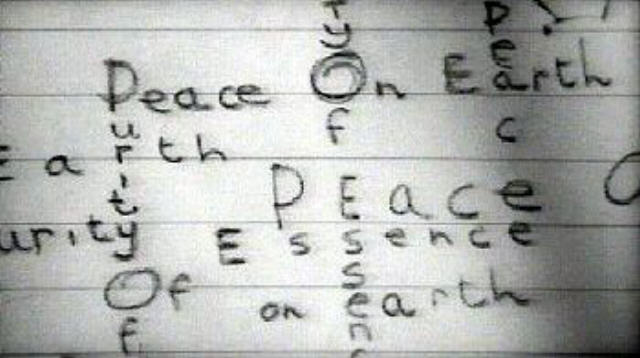
Anyway, there are purity rings aplenty, and we need to maintain our Purity of Essence.
Now, of course, this "purity" and "virtue" are both references, not coded at all, to virginity. While the abstinence movement has a motto that is semantically and philosophically suspect ("True love waits"), as well as theologically null, they have learned exactly one lesson from previous attempts at genetic clamp down: they have chastity control for both male and female alike. Both boys and girls are encouraged to spend money on special rings that they can wear that will prove that they are virgins. Girls at school calling you a slut? Slip one of these on your finger, preferably from a fine jeweler, and you can show off your taste in jewelry, your class, and put those rumors to bed (but nothing else). Your son is hording stacks of Hustler, and his "history" tab on Internet Exploder shows Red Tube and other nasty sites? Weld this thing on the offending hand.
Let's assume, just for the sake of argument, that the children want these items. I have not been convinced of it, but let's make the assumption. If they do, their motives will come from the sort of true purity that the adult world has forgotten and cannot access.
However, whether the desire for the rings comes from the children or the adults, let's step back and think about what they are for just a second. They are visible emblems of hymeneal state! These are the most primitive, pre-industrial, bride-price, gauche, commodifying, reductions of the value of the person to a single experience that we could come up with. They turn a single event into the meaning of the girl. The boy can be "pure" again. He can wait some more. She, though, is testifying. She is advertising her virginity.
I find this vile. I find it a horrific thing to do to one's daughter, to see in someone else's daughter, to accept in social behavior. It is advertising.
"By this sign, you may conquer," it says. It reduces our young women to flaps of skin, to incidents, to accidents, to crimes, and then it slaps a sign on them, a seal.
I pray we return to carrying our signs in our hearts and living our faiths rather than advertising them.
"If a minister believes and teaches evolution, he is a stinking skunk, a hypocrite, and a liar." -- Billy Sunday, 1925Well, there are few stupid arguments as stupid and stupidly hot as "evolution," with the very name of the debate telling lies and the participants occupying increasingly weird positions in order to have absolutely nothing to do with the other. Instead of extending an open ear or mind to one another, they begin from the assumption that the other is either an agent of evil or intolerance and then proceed to revile and ostracize.
I, of course, have no real problem with the idea of the Origin of Species in adaptation to environmental pressure and the morphological and genetic changes necessary to create greatest fitness for an environment. I don't have a problem with the earth being quite old. I don't have a problem with God working over a very long time. I don't worry about it much, either.
I don't worry about the "theory" part, either, because there have been multiple adaptations to environment in my lifetime that have generated new organisms, if not new species (speciation is slow, even for bacteria, because we talk about species in terms of sexual reproduction and viability of young, and I don't think bacteria get it on). The moths adapting to soot.... Meh. I'm not a bird. If someone "proves" evolution tomorrow, my beliefs in the Advent won't change, and my belief in the resurrection won't change, and my belief in a single God won't change. If someone "proves" creation tomorrow, my beliefs will be similarly unchanged.
Does this mean that "the Bible is wrong?" Well, my illustration, above, is of Noah's Ark, and you can read Augustine's Civitas Dei for his allegorical reading of the Ark. To him, the Ark was the human body, and it would be saved by the dove, as Christ would save us in the sea of sin and death. If that argument by analogy bothers you, you can look at it another way entirely and ask whether or not God made a Covenant with the human race that, although they had sinned in Eden and shown that they were going to go for the sinful path every time and build every city on the master plan of Sodom, He would agree to tolerate the wickedness of the world if His people held true to Him? Does that seem like a valid understanding? Is it fit cosmology? In fact, if you put a time line out, where the events are spiritual rather than chronological, you have generation, choice, degradation, choice, degradation, choice, salvation, choice....
I was talking to a group the other day about sex and gender. The group had within it some people who don't believe in Evolution. They will not tolerate anyone who mentions evolution from the podium, either. That does not hem me in as much as you might think, I find. Why would I need to talk about it? What on earth do pre-humans have to do with any topic I'm going to discuss?
Do these students believe in genetics? That is all they need. They only need to have been to a farm, or had dogs, or seen children. They only need to know about primitive animal husbandry. If parents have an innate trait, or even an epigenetic trait from their environments, there is a strong chance that the same epigenetics (through gender) will be at play in their same sexed offspring and genetics will be at work as well.
The point I was getting to was the debatable science about masculine and feminine brains. According to this research, exposure to testosterone in vitro causes the brain to go off towards war toys and logic (and rape, of course, because men are all rapists). Lacanian "research" agrees that women's "polymorphous perversity" means that their egos are amorphous and marshmallow-like and therefore non-linear. The masculine is arrows and sticks and guns and spears... especially spears. On the brain side, the masculine is plot that moves strictly and rigidly from 1 to 10, while the feminine wanders and floats. Lyric poetry is feminine, and epic poetry is masculine. Masculine is Stephen King, and feminine is ... well, no one agrees.
When I've had these sessions with these skeptical students, I have pointed out, over and over again, that it is always possible that these people make correct observations and have silly explanations for them. I.e. it is possible that Freud's description of the "anal retentive" personality is spot on, that there are loads of folks who fit it precisely, but it's really unlikely that all of them are secretly clenching their sphincters and enjoying it.
Anyway, it occurred to me that I could go at sex and gender and brains and bolster this stuff, overcoming their reluctance, with evolution-ish explanations. I said, "Just think back to all of us living in tribes. We don't know anything about germ theory, and we don't know anything about machine guns. We don't know about viruses, and we don't know about advanced flight. Now, it makes sense that the men who go out to kill the bear without worrying about how the bear feels are going to be the best men in the village, doesn't it? It also makes sense that women who worry constantly about how clean their tents are are going to have the healthiest food, the healthiest children, the healthiest husbands, and the healthiest homes, and if they worry always about the health and emotions of the children that their mates are ignoring, they're going to be better mothers. We don't need evolution for that to get passed on, do we?"
I just thought I would share this. Everyone shrieks in horror, but "evolution" has to do with the derivation of species and genera. Genetics and inheritance is something I don't think even the most radical literalist would deny.




 In Scythia,